The Great Migration in Tanzania: When to Go, Where to Stay and What to Expect
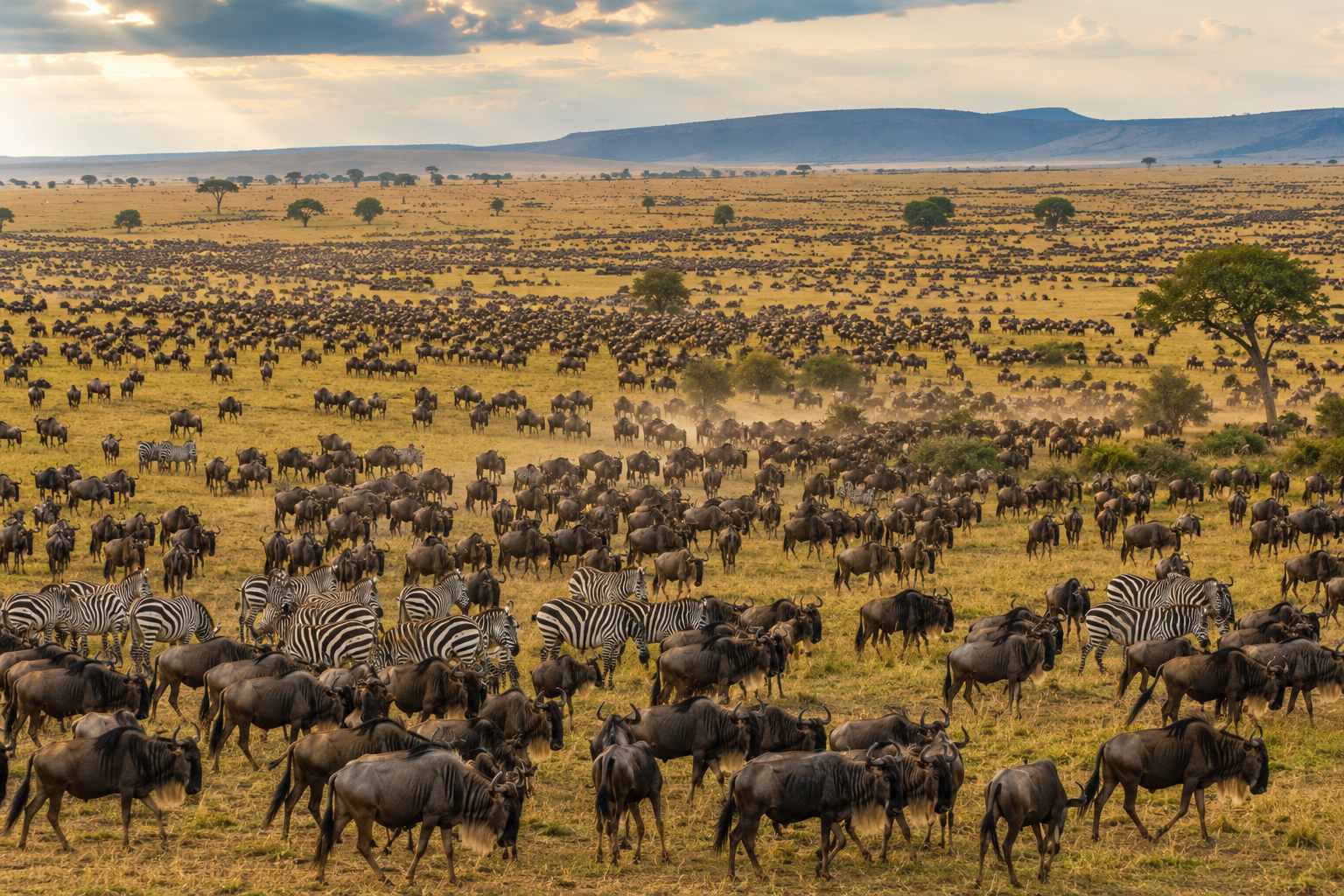
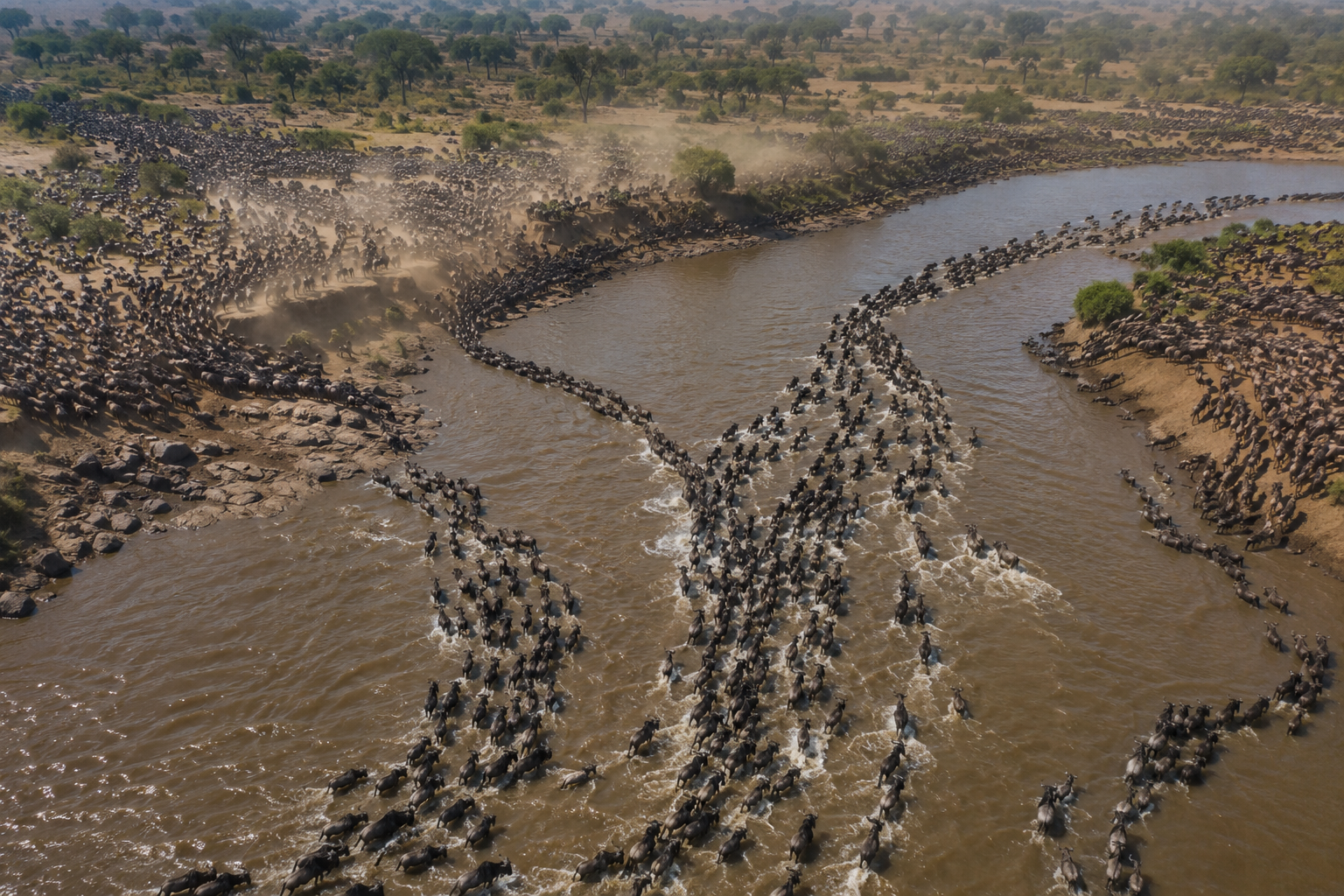
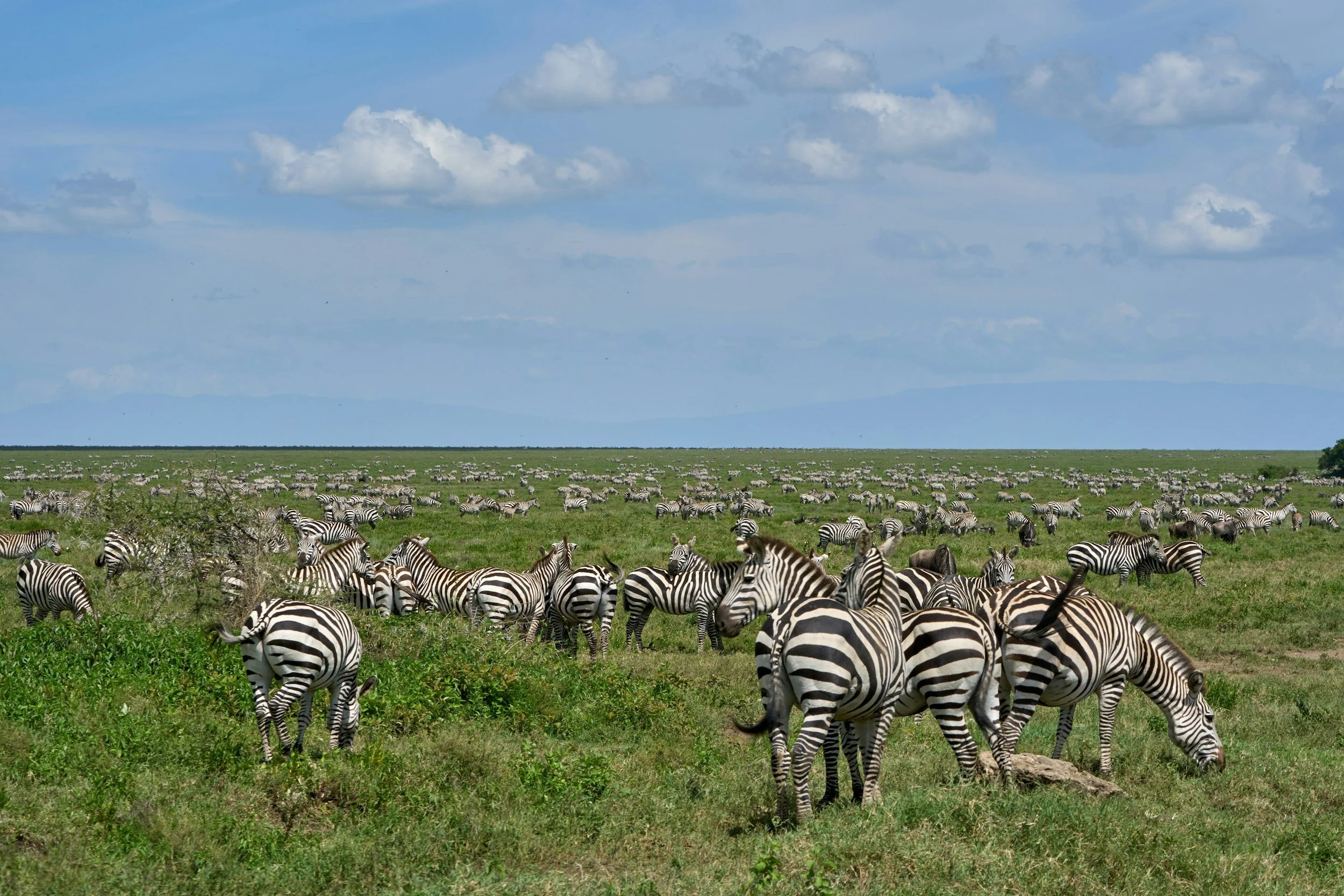
The Great Migration is one of the most extraordinary wildlife events on Earth. Every year, more than a million wildebeest, accompanied by vast herds of zebra and gazelle, travel through the Serengeti–Mara ecosystem in search of fresh grazing and water.
But despite its name, the Great Migration is not a single event that happens at one particular time or place. It is a continuous, year-round journey through Tanzania’s Serengeti and Kenya’s Maasai Mara, shaped by rainfall, changing seasons and the availability of food.
That means planning a Great Migration safari is less about choosing the “best” month and more about deciding which part of the journey you would most like to experience.
Do you want to witness thousands of calves being born on the southern plains? See enormous herds moving across the Serengeti? Or wait beside the Mara River in the hope of witnessing one of its famous crossings?
This guide covers everything you need to know about the Great Migration in Tanzania, including when to visit, where to stay and what the experience is really like.
What is the great migration?
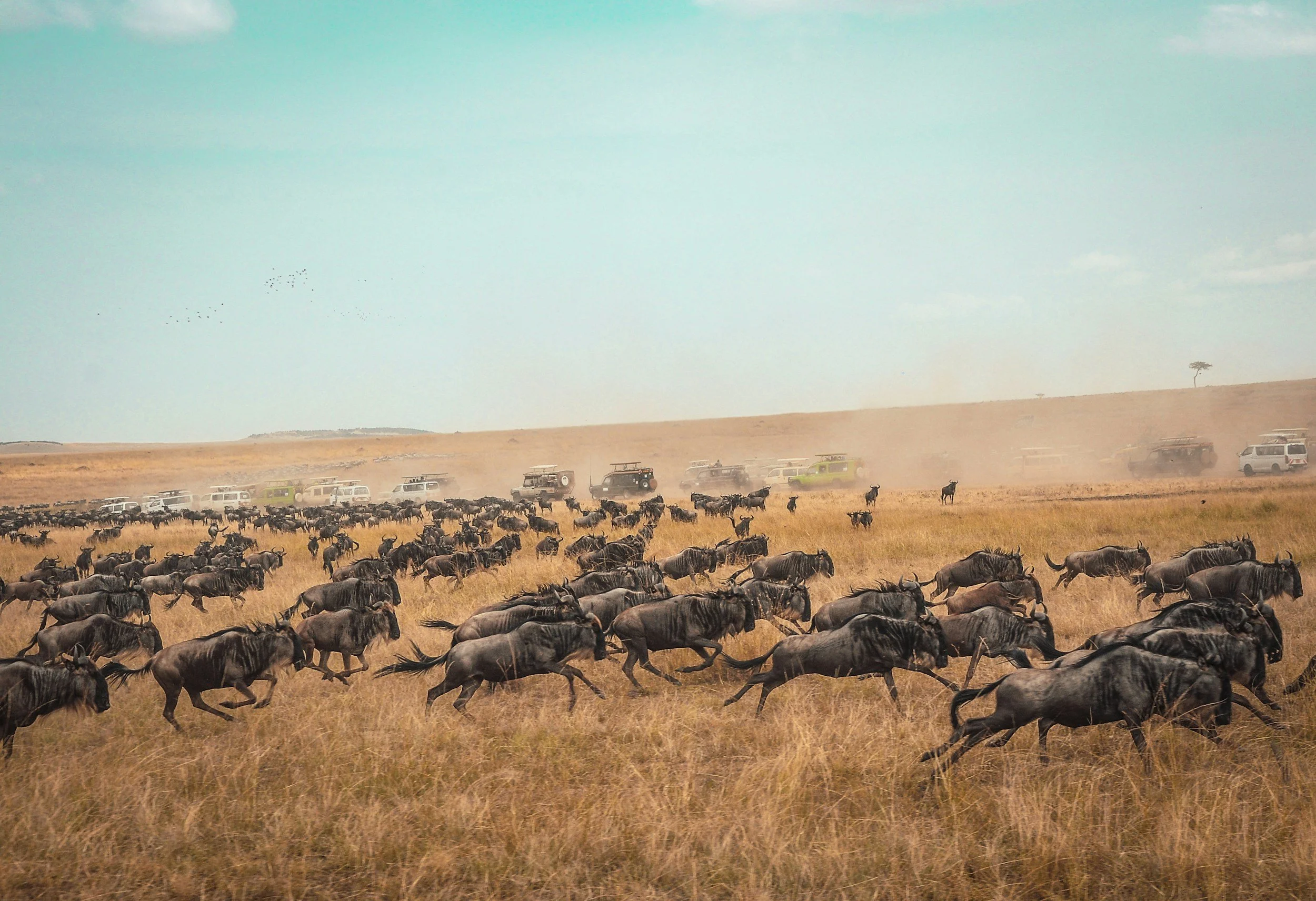
The Great Migration is the annual movement of wildebeest, zebra, gazelle and other grazing animals through the wider Serengeti ecosystem.
The animals move in a broad circular route through Tanzania’s Serengeti National Park, the Ngorongoro Conservation Area and Kenya’s Maasai Mara. Their journey is largely driven by rainfall, which determines where fresh grass and reliable water can be found.
More than 1.5 million wildebeest are commonly estimated to take part, alongside hundreds of thousands of zebra and gazelle. The animals do not move as one perfectly organised group. Instead, they spread across huge areas, sometimes breaking into multiple herds before gathering again. (Serengeti National Park)
This is why the migration can be difficult to predict precisely. Although the general route remains fairly consistent, rainfall can cause the herds to arrive earlier, remain in an area longer or change direction unexpectedly.
No reputable safari company can guarantee a river crossing or tell you exactly where every herd will be months in advance. However, staying in the correct region at the right time of year will give you the best possible chance of experiencing the migration.
When Is the Best Time to See the Great Migration?
The Great Migration takes place throughout the year, so there is no single best month for everyone.
The right time to visit depends on what you most want to see.
January to March: Calving Season in the Southern Serengeti
At the beginning of the year, the herds gather on the short-grass plains of the southern Serengeti and around the Ndutu region.
This is calving season, when huge numbers of wildebeest give birth over a relatively short period. The landscape is often green after the seasonal rains, and the open plains can be filled with wildebeest, zebra and their newborn young.
It is a beautiful time to visit, but it can also be intense. The abundance of young animals attracts predators, including lions, cheetahs, hyenas and jackals.
For wildlife photographers, calving season offers much more than large herds. You may witness newborn calves finding their feet, predators hunting across the plains and dramatic interactions between animals.
This is often one of the best periods for travellers who want a combination of migration activity, predator sightings and green scenery. (entara.co.tz)
April to May: Green Season and Movement North
As the southern plains begin to dry, the herds gradually start moving north and west through the Serengeti.
April and May generally fall within Tanzania’s longer rainy season. Roads can become muddy, afternoon storms are more common and some seasonal camps may close temporarily.
However, this can be a rewarding time for travellers who do not mind unpredictable weather. The Serengeti is normally quieter, the landscape is green and accommodation may be less expensive than during peak migration periods.
The exact location of the herds is especially difficult to predict at this time because their movement depends heavily on where rain has fallen.
May to June: The Rut and Western Corridor
As the herds move towards the western Serengeti, the wildebeest rut begins.
This is the mating season, and the plains become filled with noise and activity as males compete for females. Large columns of wildebeest may stretch across the landscape as the animals continue north.
Some herds move towards the Grumeti River and the Serengeti’s Western Corridor. River crossings can occur here, although they are usually less famous and often less congested than those at the Mara River.
For travellers who want to experience large herds without focusing entirely on a dramatic river crossing, late May and June can be an excellent option.
July to October: Northern Serengeti and Mara River Crossings
Between approximately July and October, many of the herds reach the northern Serengeti.
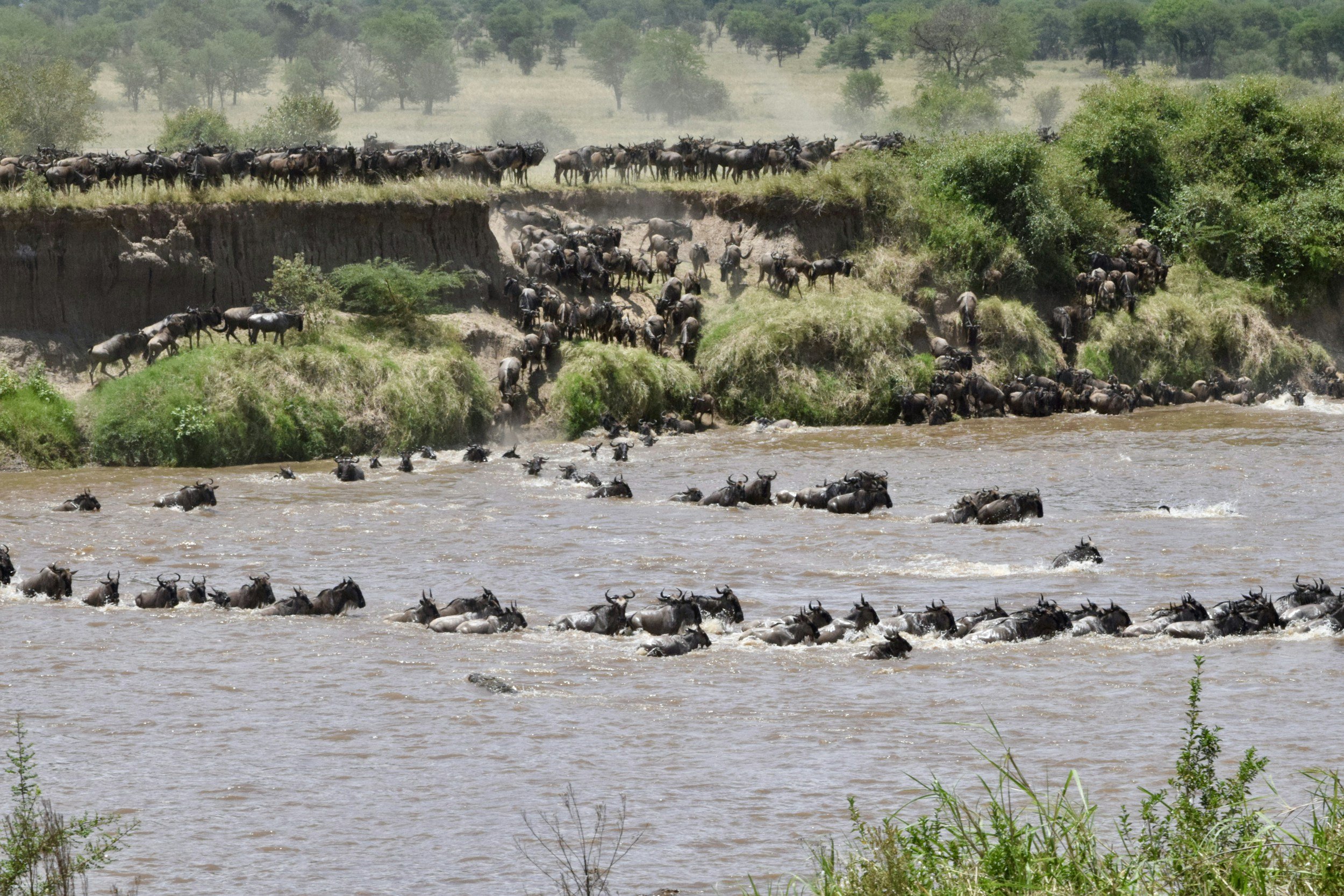
This is the period most commonly associated with the dramatic Mara River crossings shown in wildlife documentaries. Wildebeest gather near the riverbanks before suddenly beginning to cross, often creating scenes of chaos as thousands of animals enter the water.
Crocodiles, strong currents and steep riverbanks make these crossings extremely dangerous.
However, a crossing is never guaranteed. The herds may wait beside the river for hours or even days before crossing. They may begin moving towards the water and then turn away. They may also cross early in the morning, late in the afternoon or when you are at another section of the river.
Some animals cross more than once, occasionally moving back and forth between Tanzania and Kenya as rainfall and grazing conditions change.
The northern Serengeti is also worth visiting even when a crossing does not occur. The region has beautiful scenery, excellent general wildlife viewing and usually fewer permanent developments than many other safari areas.
November to December: The Return South
When the short rains begin, the herds start travelling back through the eastern and central Serengeti towards the southern plains.
This is sometimes called the return migration, although the herds do not follow a single, clearly defined route.
November can be an interesting transitional month. Herd locations remain unpredictable, but visitor numbers may be lower than during the peak river-crossing season.
By December, many wildebeest begin reaching the southern Serengeti, where the migration cycle starts again in preparation for calving season.
Where Should You Stay for the Great Migration?
Location is one of the most important parts of planning a migration safari.
The Serengeti is enormous, and staying in the wrong region can leave you several hours away from the herds. A lodge may technically be “in the Serengeti” while still being far from the migration activity during your chosen month.
For the best experience, choose a camp positioned close to the herds during the season in which you are travelling.
Staying With Entara in the Serengeti
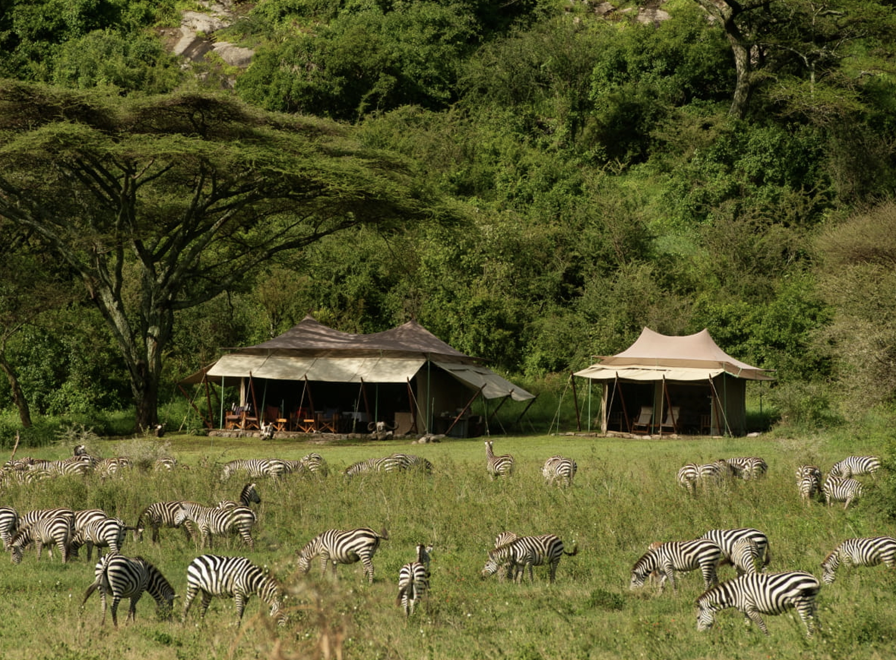
Entara operates a collection of intimate camps and lodges across Tanzania, with a strong focus on immersive safari experiences and a lighter environmental footprint.
For the Great Migration specifically, one of Entara’s most interesting properties is Esirai Camp.
Esirai Mobile Migration Camp
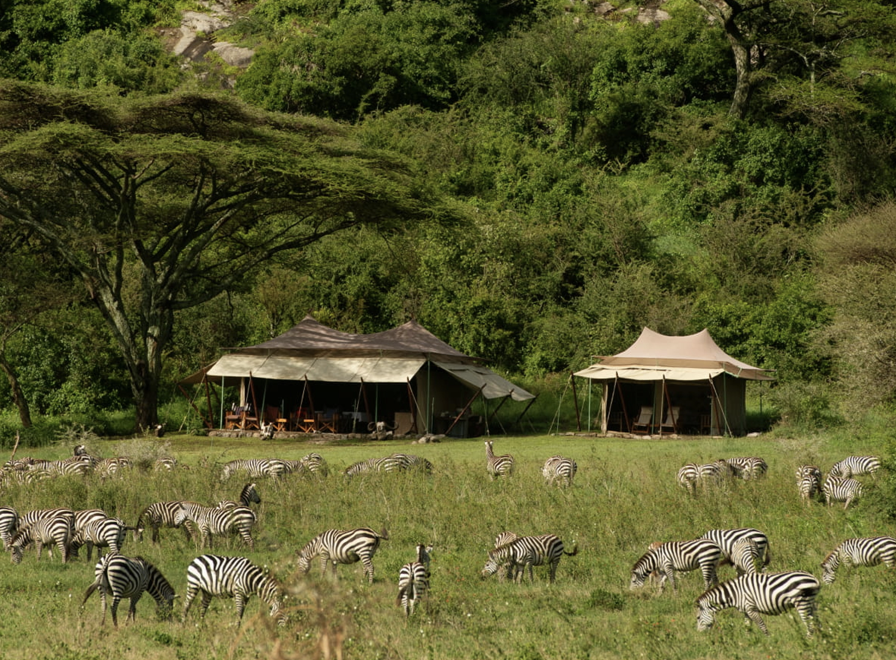
Esirai is a mobile camp designed to move between the northern and southern Serengeti as the seasons change.
Instead of remaining in one permanent location throughout the year, the camp relocates so that guests can stay closer to two of the migration’s most important periods: calving season in the south and the Mara River season in the north.
The camp is moved approximately 180 kilometres twice each year, using a design intended to keep its ecological footprint relatively light. (entara.co.tz)
During the northern season, Esirai is positioned near the Gardenia Stream in the northern Serengeti, offering access to the wider Mara River region and its crossing points.
During the southern season, it provides a base for experiencing the migration around the southern Serengeti, including the calving and rutting periods.
This mobile approach is particularly valuable because it places you closer to the wildlife rather than requiring extremely long drives from a permanent central lodge.
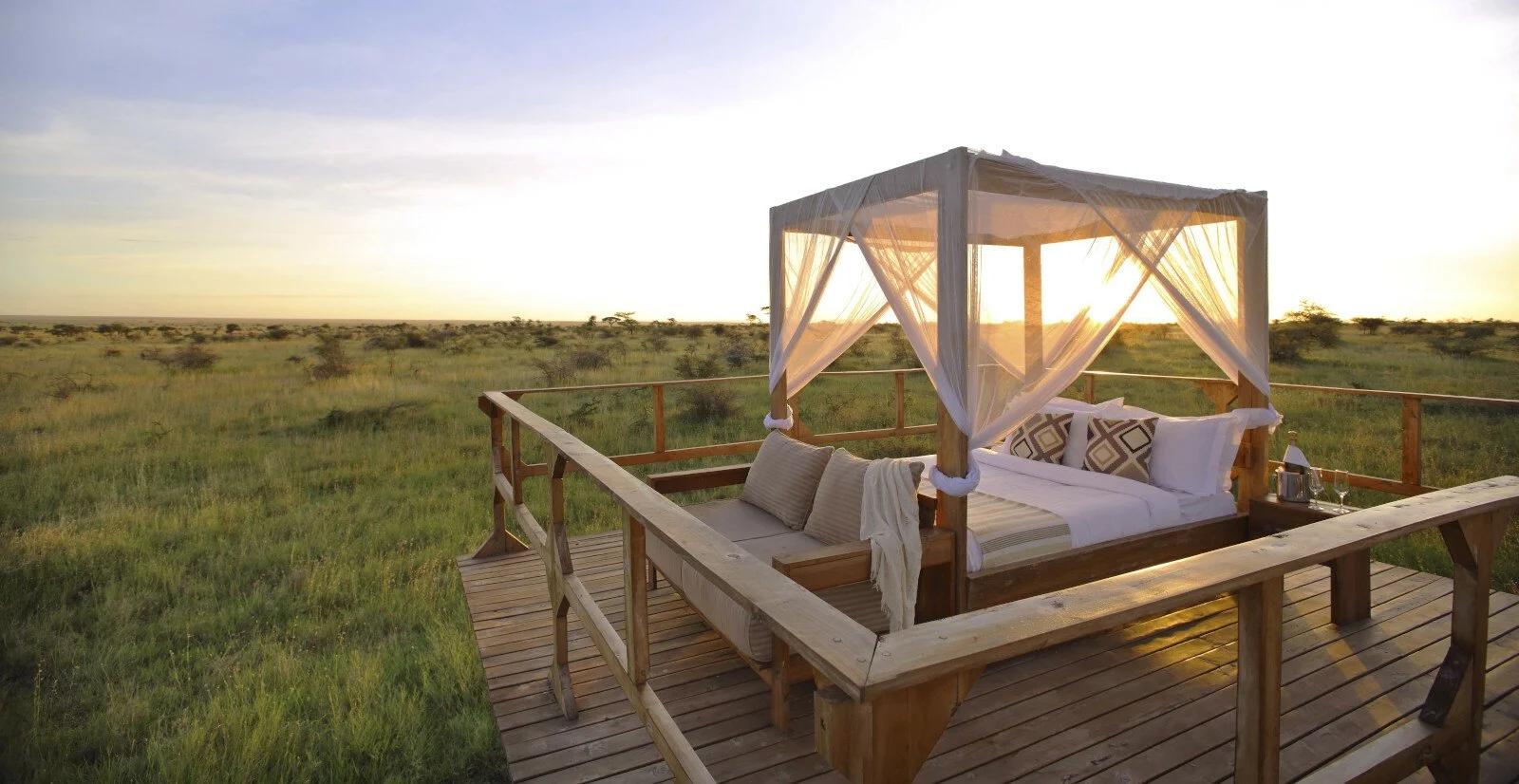
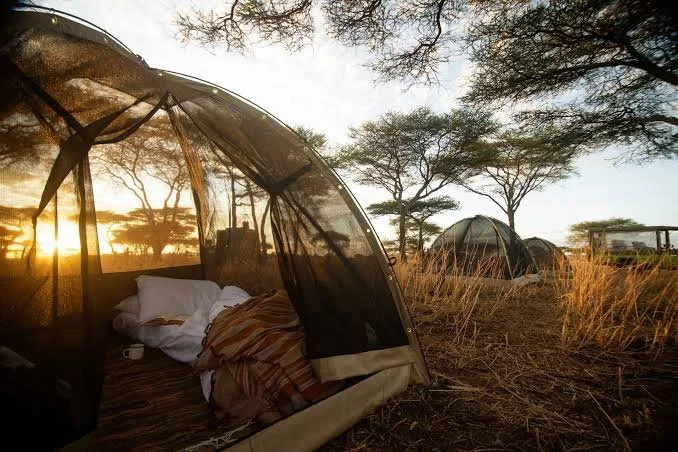
Esirai combines the feeling of a traditional tented safari with comfortable beds, private bathrooms, warm hospitality and meals served in the wilderness. It remains an intimate camp, helping the experience feel connected to the surrounding landscape rather than separated from it.
Olmara Camp in the Eastern Serengeti
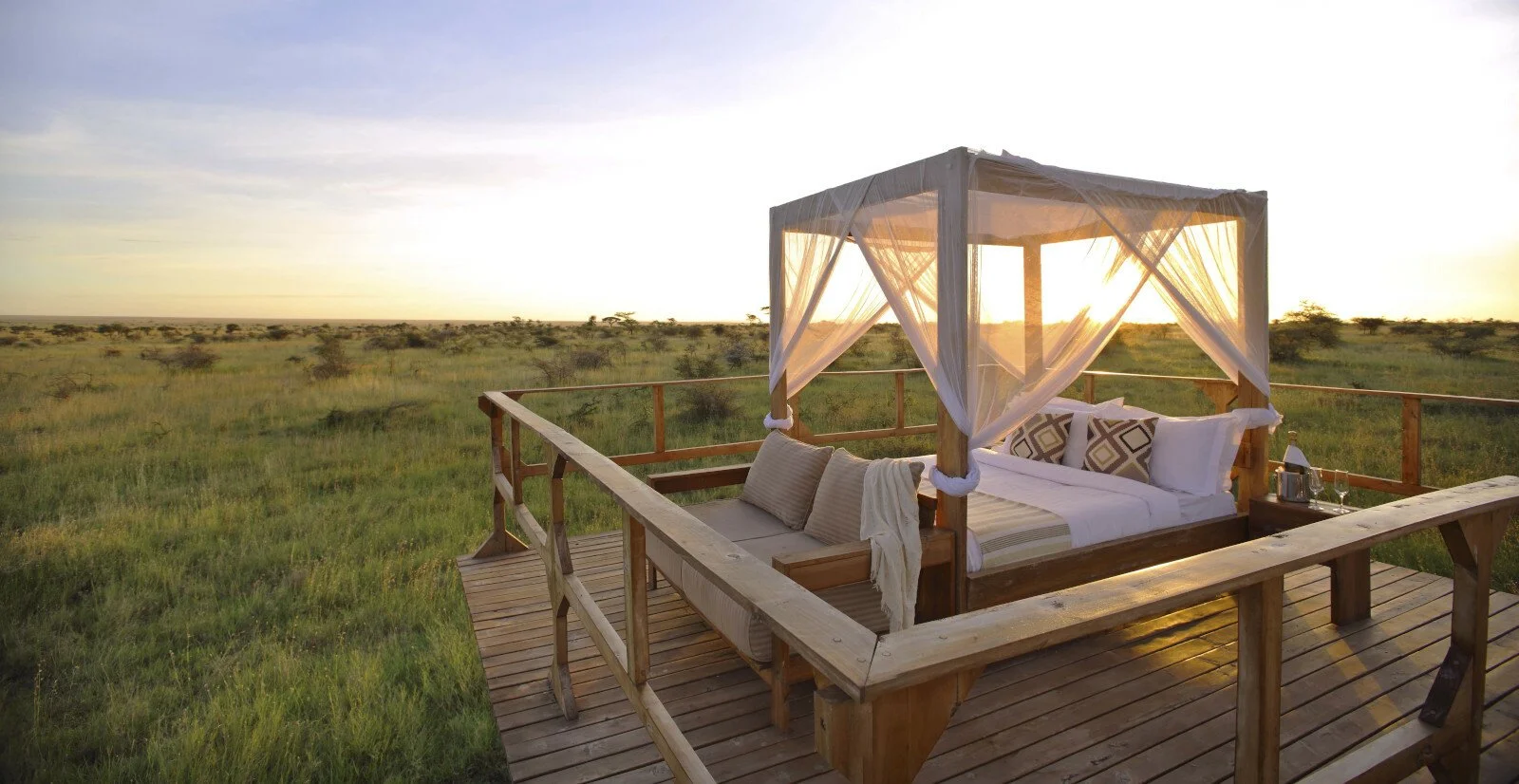
The Great Migration should not be the only focus of a Serengeti safari.
Entara’s Olmara Camp lies in the eastern Serengeti, an area known for its remote atmosphere and excellent big-cat viewing. Entara describes Olmara as a wilderness haven particularly suited to wildlife photographers. (entara.co.tz)
The eastern Serengeti can be especially rewarding when the herds begin returning south later in the year. However, Olmara is also worth considering as part of a broader itinerary because of its resident wildlife, open landscapes and relative isolation.
Combining a migration-focused mobile camp with a property such as Olmara allows you to experience more than one side of the Serengeti.
You can spend part of your journey following the herds and another part enjoying quieter wildlife encounters away from the busiest migration areas.
What Should You Expect on a Great Migration Safari?
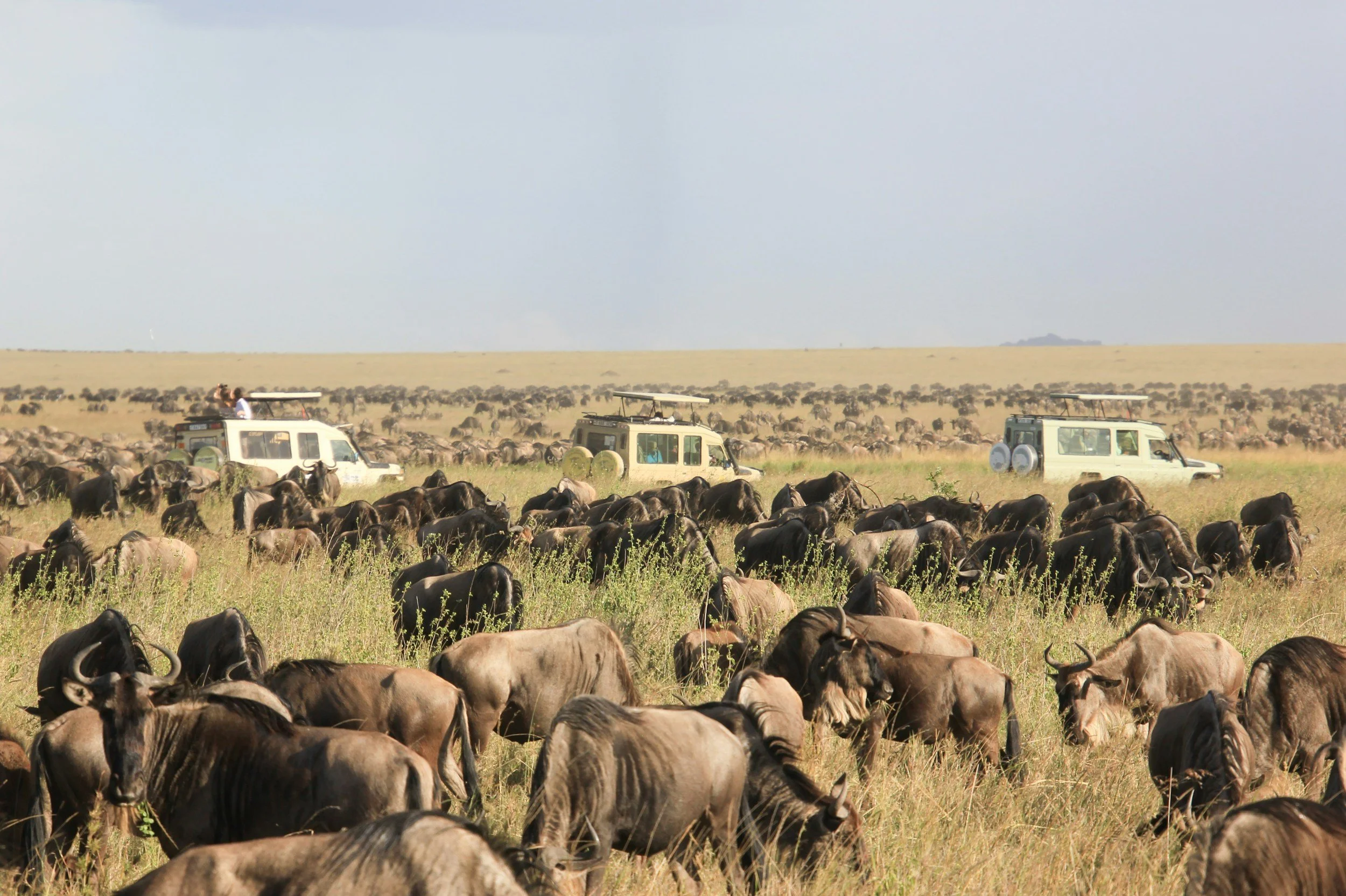
The Great Migration can be breathtaking, but the reality is often different from the perfectly edited scenes seen in documentaries.
You May Need to Be Patient
River crossings are unpredictable.
You may spend several hours waiting near the river without anything happening. Wildebeest can approach the water, gather in huge numbers and then suddenly retreat.
When a crossing does happen, it may last a few minutes or continue for much longer, depending on the size of the herd.
A good guide will monitor animal behaviour, communicate with other guides and choose a position that gives you the best chance without putting pressure on the wildlife.
The Serengeti Can Be Busy
The river-crossing season is one of the most popular periods for visiting the Serengeti.
When herds gather near a well-known crossing point, many safari vehicles may arrive in the same area. Staying in a well-positioned camp can reduce driving times and give your guide greater flexibility to visit quieter sections of the region.
Travelling during calving season, the rut or one of the transitional months can provide a very different migration experience, sometimes with fewer vehicles.
The Migration Is More Than River Crossings
It is easy to think of the migration only as wildebeest jumping into the Mara River, but that is just one chapter of a much larger story.
The migration also includes births, courtship, predator encounters, enormous herds moving across open plains and quieter moments when animals simply graze beneath the vast Serengeti sky.
Some of the most memorable sightings may have nothing to do with a crossing.
You might see a cheetah watching a herd from a termite mound, a lioness moving through the grass or thousands of wildebeest stretching to the horizon.
Every Day Will Be Different
Safari days usually begin early, when temperatures are cooler and animals are more active.
Depending on the location of the herds, you may return to camp for lunch or spend the full day exploring with a packed meal.
Distances in the Serengeti can be significant, and roads are often rough. Prepare for long periods in the vehicle, dust during the dry season and occasional rain or mud during greener months.
The unpredictability is part of the experience. You never know exactly what will be waiting around the next corner.
How Many Days Do You Need?
We recommend spending at least three nights in the region where the migration is expected to be.
This gives you multiple game drives and improves your chances of encountering the herds or witnessing a crossing. Staying for only one or two nights can place too much pressure on a single day.
A complete northern Tanzania itinerary will normally require between seven and twelve days, depending on how many areas you would like to visit.
Alongside the Serengeti, you could include:
- Tarangire National Park
- The Ngorongoro Crater
- Lake Manyara
- Lake Eyasi
- Arusha National Park
- The Randilen Wildlife Management Area
Entara has properties in several of these regions, making it possible to build a connected itinerary through northern Tanzania while maintaining a similar style of accommodation and approach to responsible tourism. (entara.co.tz)
What Should You Pack?

Pack light, comfortable clothing in neutral colours, along with warm layers for early morning drives.
Even during warmer months, mornings in an open safari vehicle can feel surprisingly cold.
Useful items include:
- A warm jacket or fleece
- Comfortable neutral-coloured clothing, no white or bright colours
- A sun hat and sunglasses
- Sunscreen
- Binoculars
- A camera with a zoom lens
- Spare batteries and memory cards
- Closed shoes
- A reusable water bottle
- A small day bag
- Any essential medication
If you are flying between safari camps in a small aircraft, luggage will usually need to be packed in a soft-sided bag, and weight restrictions may apply.
How to Plan a More Sustainable Great Migration Safari
Wildlife tourism can play an important role in funding protected areas and supporting employment, but the way a safari is planned still matters.
Look for camps and operators that employ local staff, reduce waste, conserve water, limit permanent environmental impact and contribute meaningfully to surrounding communities and conservation projects.
Entara’s camps are built around principles of sustainable tourism, with an emphasis on intimate experiences, conservation and a light ecological footprint. (entara.co.tz)
For planning the complete journey, we recommend Viatu.
Viatu creates tailor-made trips across Africa and works with carefully selected local accommodation providers and safari partners. Instead of offering a generic package, the team can build an itinerary around the season, the experiences you care about and the region in which the migration is most likely to be found. (viatu.com)
Viatu is also a certified B Corporation. This means its broader social and environmental performance has been assessed against B Corp’s certification requirements, rather than sustainability being used only as a marketing claim. (viatu)
Planning through Viatu is particularly useful for the Great Migration because the logistics can become complicated.
Your itinerary may involve multiple camps, national park fees, internal flights, long road transfers and locations that change according to the season. Having one experienced team coordinate the trip makes the process far easier. Speaking of trips - here is our personal trip itinerary with Viatu.
Is the Great Migration Worth It?
Absolutely—but it is important to arrive with realistic expectations.
You are entering a wild ecosystem, not attending a scheduled performance. The herds do not follow a timetable, and the most dramatic moments cannot be guaranteed.
That uncertainty is also what makes the experience so powerful.
Whether you witness a river crossing, spend a morning surrounded by newborn calves or simply watch thousands of wildebeest moving across the plains, the scale of the migration is difficult to understand until you see it in person.
With the right timing, a well-positioned camp and an experienced guide, a Great Migration safari can be one of the most memorable wildlife experiences in Africa.
For a journey that combines excellent locations with a thoughtful approach to conservation, Entara’s camps provide an ideal base in Tanzania. And for travellers who want help connecting the accommodation, transport and safari experiences into one carefully planned itinerary, Viatu is our recommended agency for arranging the trip sustainably.
Frequently Asked Questions
What is the best month to see the Great Migration in Tanzania?
January to March is generally best for calving season in the southern Serengeti. July to October usually offers the best chance of seeing Mara River activity in the northern Serengeti.
However, exact timing changes each year according to rainfall.
Are river crossings guaranteed?
No. Wildebeest movements are unpredictable, and no lodge, guide or safari company can guarantee that you will witness a river crossing.
Spending at least three nights in the northern Serengeti will improve your chances during the usual crossing season.
Is the Great Migration only in Kenya?
No. Most of the migration cycle takes place within Tanzania’s Serengeti ecosystem. Kenya’s Maasai Mara forms the northern section of the wider migration route.
Tanzania offers the calving season, the western movement, the rut, the northern river-crossing season and the herds’ eventual journey south.
Is calving season better than the river crossings?
They are completely different experiences.
Choose calving season for green landscapes, newborn animals and predator activity. Choose the northern season for drier weather and the possibility of dramatic Mara River crossings.
Where should I stay for the Great Migration?
Choose accommodation based on the month in which you are travelling.
Entara’s Esirai Mobile Migration Camp is designed specifically around this challenge, moving between the southern and northern Serengeti to remain closer to the migration during key seasons.
How far in advance should I book?
For the northern Serengeti between July and October, booking nine to twelve months ahead is advisable, especially if you want a particular camp.
Calving season is also popular, so booking several months in advance is recommended.
Who can help plan a Great Migration safari?
Viatu can create a tailor-made Tanzania itinerary that includes Entara’s camps, transport, guides and additional destinations. Its B Corp certification and focus on carefully selected partners also make it a strong option for travellers who want to plan their safari more responsibly.