Some links in this post are affiliate links. If you book through them, we earn a small commission at no extra cost to you. It helps us keep making free guides and videos.
Mauritius has a reputation. It's one of the most beautiful islands in Africa, but it's largely known for one thing: luxury resorts, honeymoons and perfect beaches. And honestly, we understand the appeal. But we were curious about what lies beyond that version of the island. Does it have its own identity? What's the local food really like? Is there enough to do once you leave the sun lounger?
This trip was a long time coming, too. I did the research for my master's degree on Round Island, just off the coast of Mauritius, and promised Claire I'd bring her here. It took ten years. So we spent two weeks driving around the North, West and South-West with our friends to find out. Here's what we loved, what we'd skip and what we'd do differently.
Free download: our Essential Mauritius Guide covers the entry rules and travel form, when to go, getting around and what things cost in three pages. Grab it before you book anything.
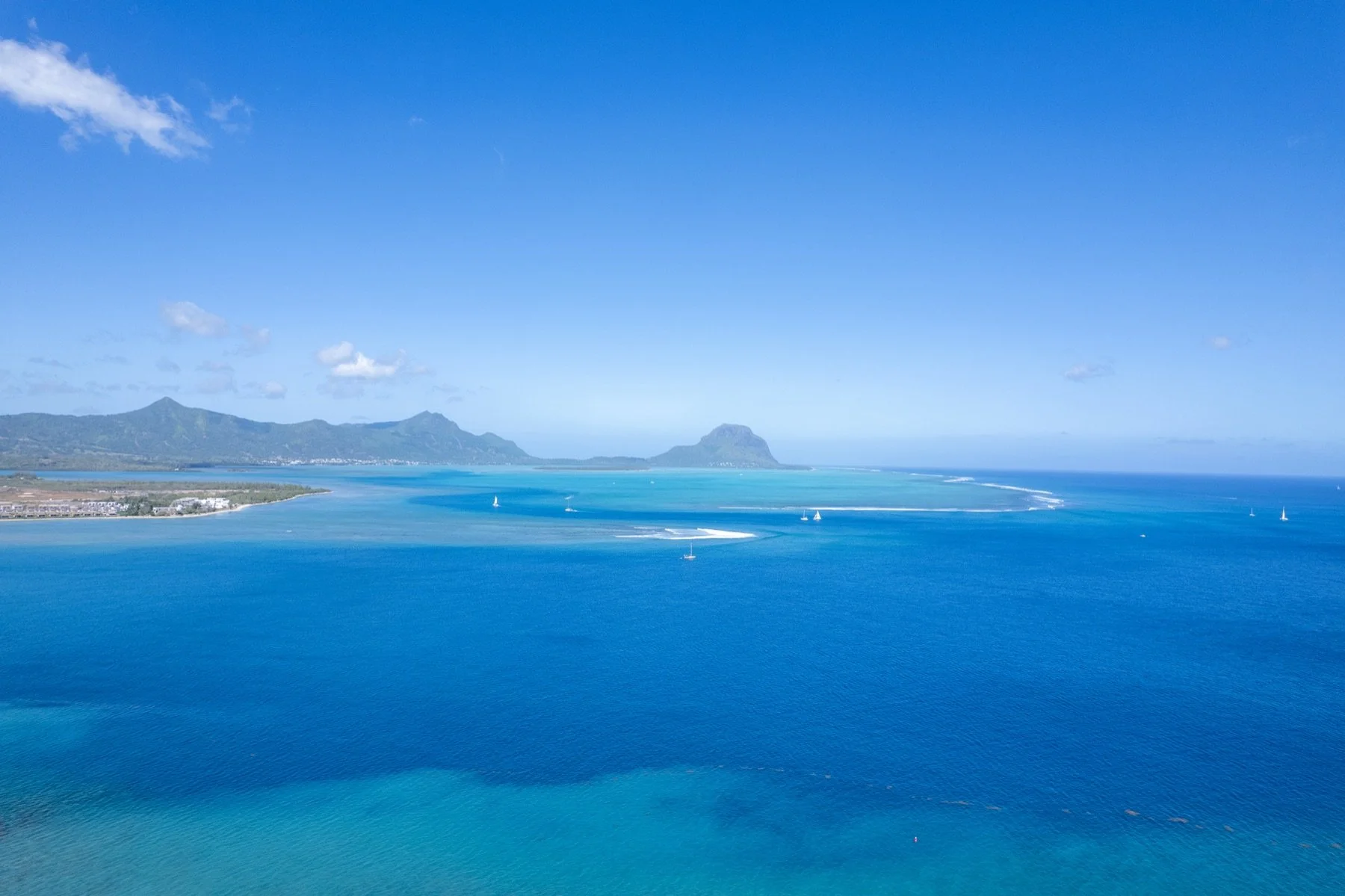
Deep blue water off the West coast of Mauritius
Our Mauritius route at a glance
Grand Baie: calm beaches, snorkelling, cafés and an easy introduction to the island
Port Louis: a street-food tour on our way down the West coast
Tamarin: surf-town life, a catamaran day and our favourite beach
Flic en Flac: a couple of nights trying out the resort experience
Back to Tamarin: a beachfront villa, a waterfall hike and day trips to Le Morne and Chamarel
We flew from Johannesburg, which is only about four hours, and there's a direct flight from Dubai of around six and a half. You can drive almost anywhere on the island in under two hours, which is why we think having a car makes this such an easy trip.
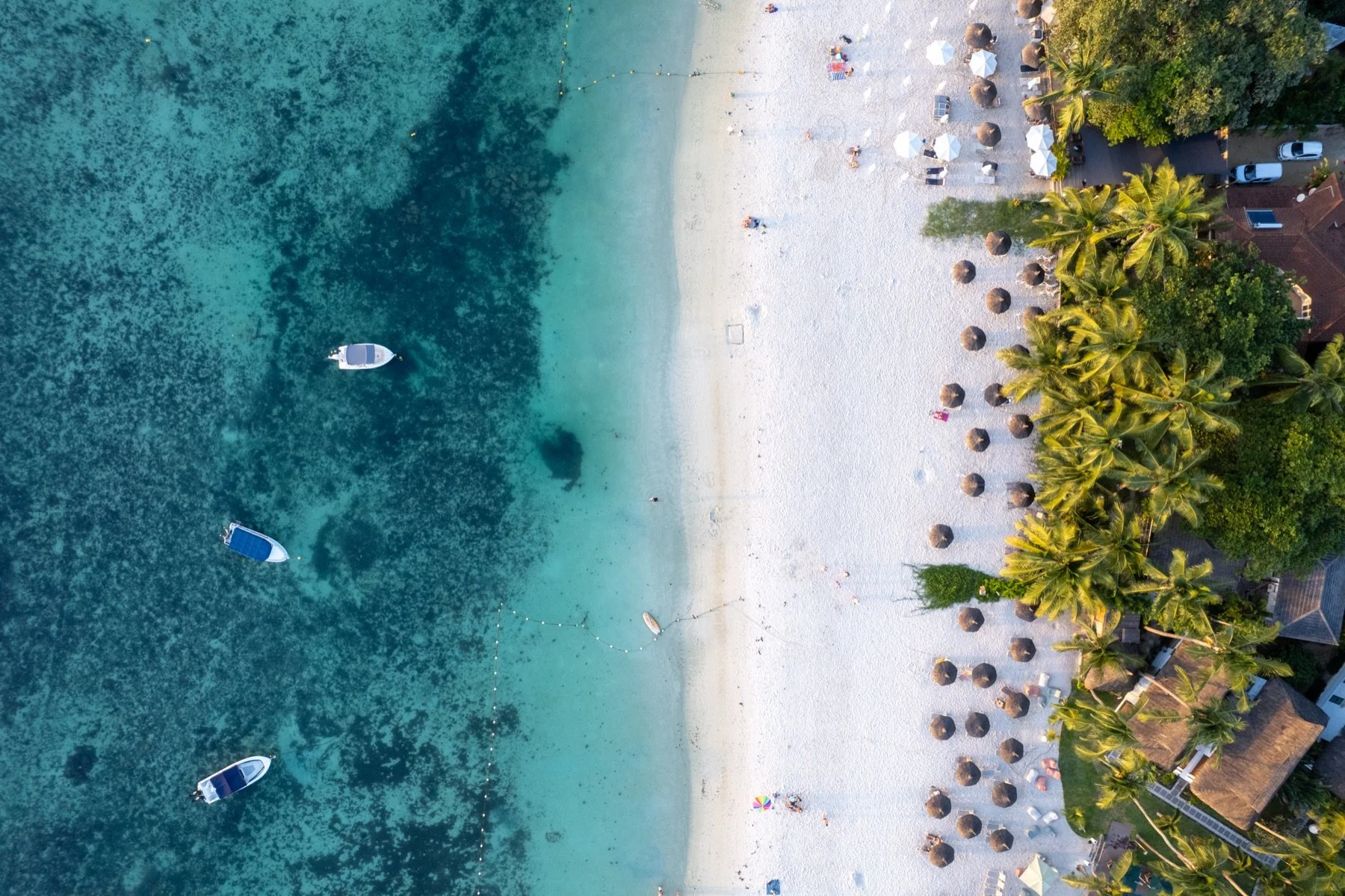
The white sand and clear water of the North coast
Grand Baie: the easy place to start
Immigration took a while, so even though we landed before 7 pm, we only got to our accommodation after 9. By then we couldn't find a single restaurant open nearby, and not even Burger King stays open past 10. Luckily our host had leftovers. Our tip: stop at a supermarket on your way from the airport.
We stayed in KStudios, a budget studio in the centre of town that reminded us of our Bali homestays. It had a little kitchen, a comfortable bed and air con. For about $60 a night we did expect a bit more, though. There wasn't even hand wash in the bathroom, so bring your own soap!
Grand Baie isn't the untouched, remote version of Mauritius. It's busy, developed and one of the more touristy parts of the island. But that's what makes it such an easy place to begin. We spent a week here and we'd say three or four nights is plenty.
What surprised us straight away was how quiet the island is. It's nothing like Bali or Thailand, with their big beach clubs. And Pereybere Beach, just 3 km North of town, might be our favourite water anywhere: completely flat, with sand like powder. We've swum in the Seychelles, Greece and Thailand, and this was up there with the best of them.
For snorkelling, we bought gear at the GSR supermarket near Trou aux Biches and swam straight out from the public parking to the reef. The morning is the best time to come. Then head to Bloom for possibly the best coffee on the island, or Fynbos Meeting Place, a lovely café run by a South African.
We also liked the SSR Botanical Garden in Pamplemousses (300 rupees each), with its giant Aldabra tortoises and huge lily pads. For dinner, La Rougaille Creole was the standout, with live music, an amazing chicken curry and rougaille, the famous local tomato stew. Make a reservation: it's really popular.
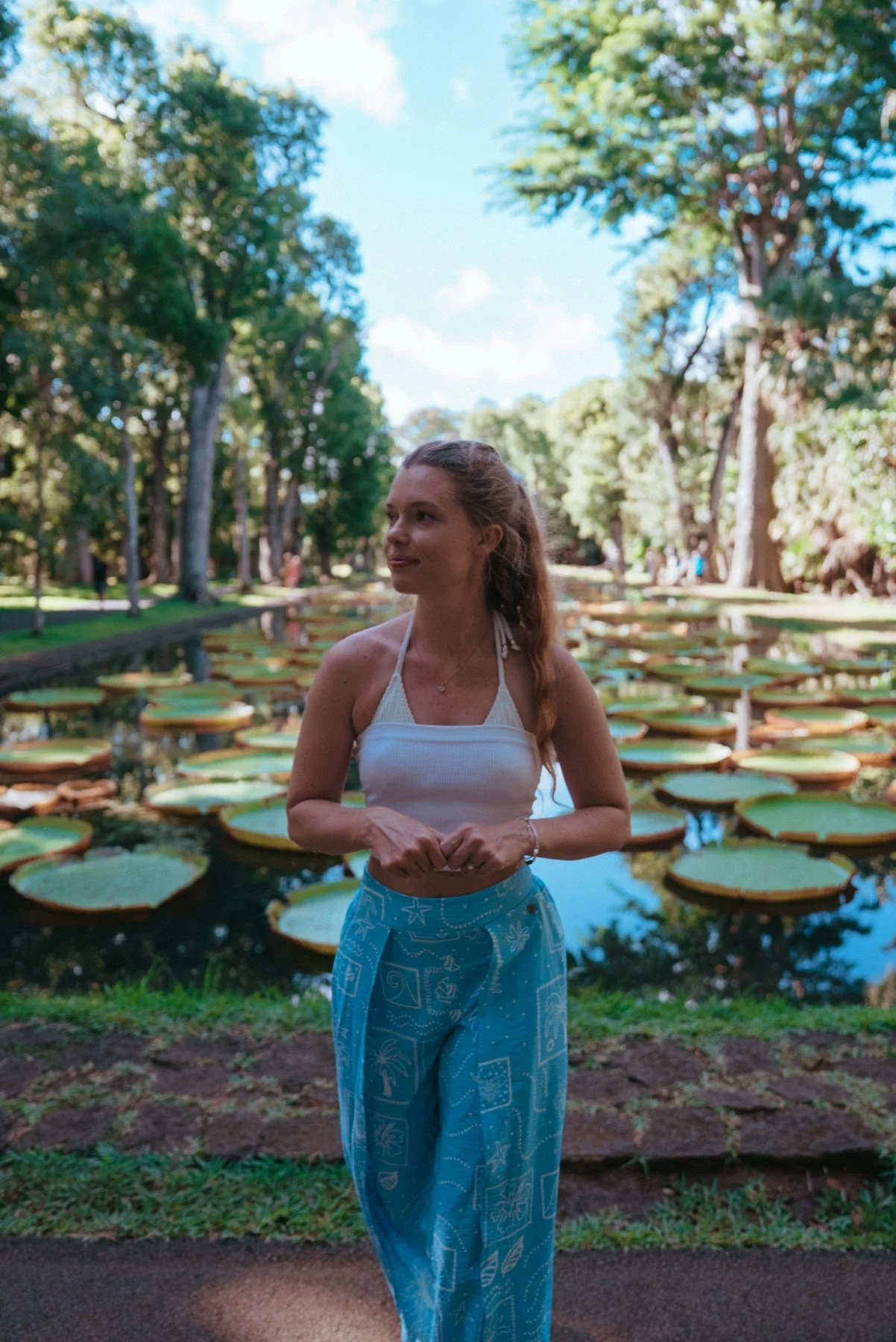
The giant lily pads at the SSR Botanical Garden in Pamplemousses
Working remotely? Workshop17 in Grand Baie is one of the best co-working spaces we've ever used.
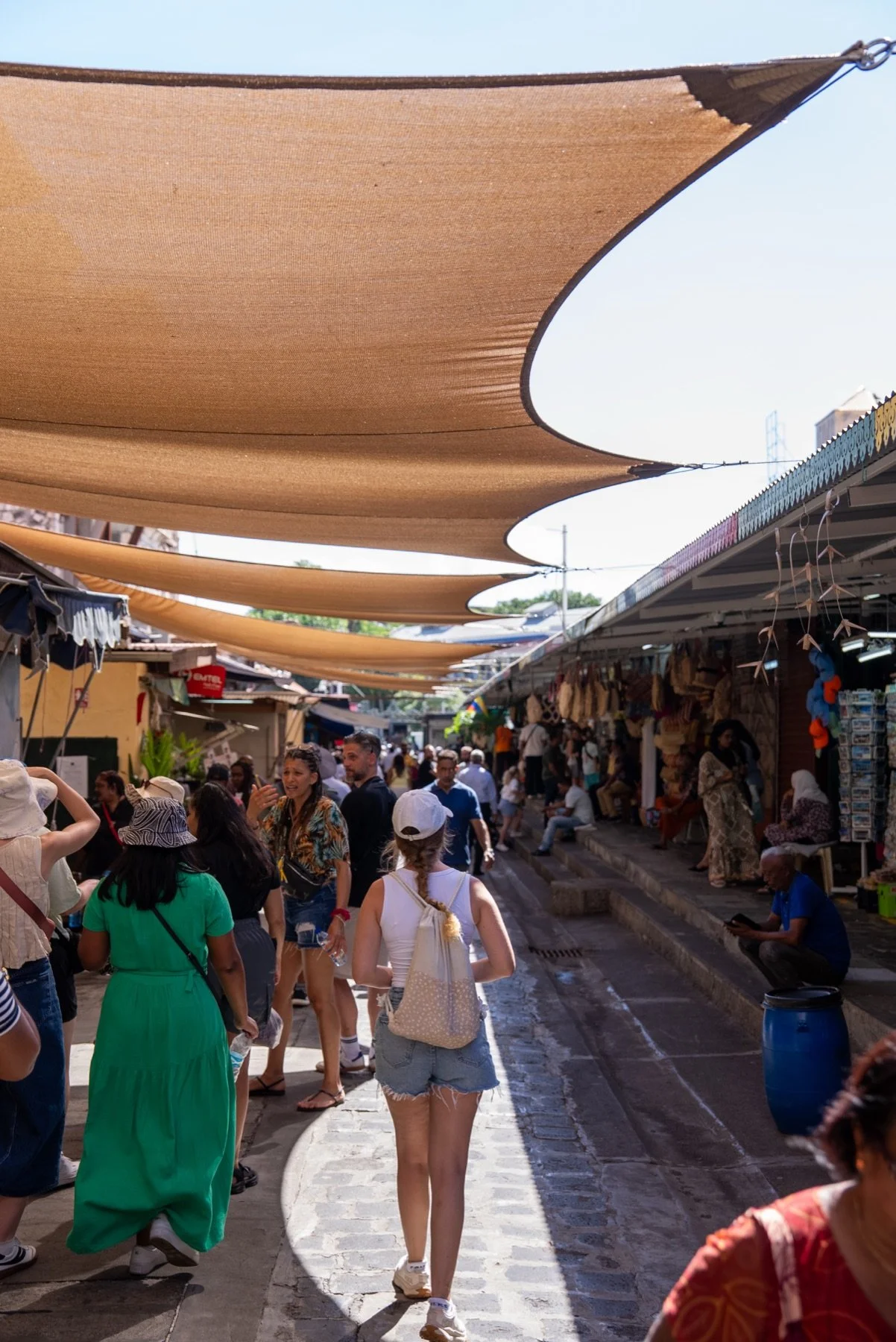
A shaded market street in Port Louis
Port Louis: don't skip the food tour
This was one of the highlights of our whole trip. We booked a street-food tour of Port Louis on GetYourGuide, and we'd never have found those places on our own: a toy shop where the owner's wife makes pineapple pastries, a tiny samosa stand, and a metre-wide dumpling spot in Chinatown right next to a mosque.
We ended with dholl puri, a soft flatbread stuffed with yellow split peas, and alouda, a cold, sweet milk drink with basil seeds. We also loved the central market, where the prices are the same for tourists and locals.
The tour also took us to Aapravasi Ghat, a museum we wouldn't have known to visit. It's the remains of the immigration depot where hundreds of thousands of indentured labourers arrived, mostly from India, after slavery was abolished. Around 70% of Mauritians are descended from them. If you want to understand modern Mauritius, start here.
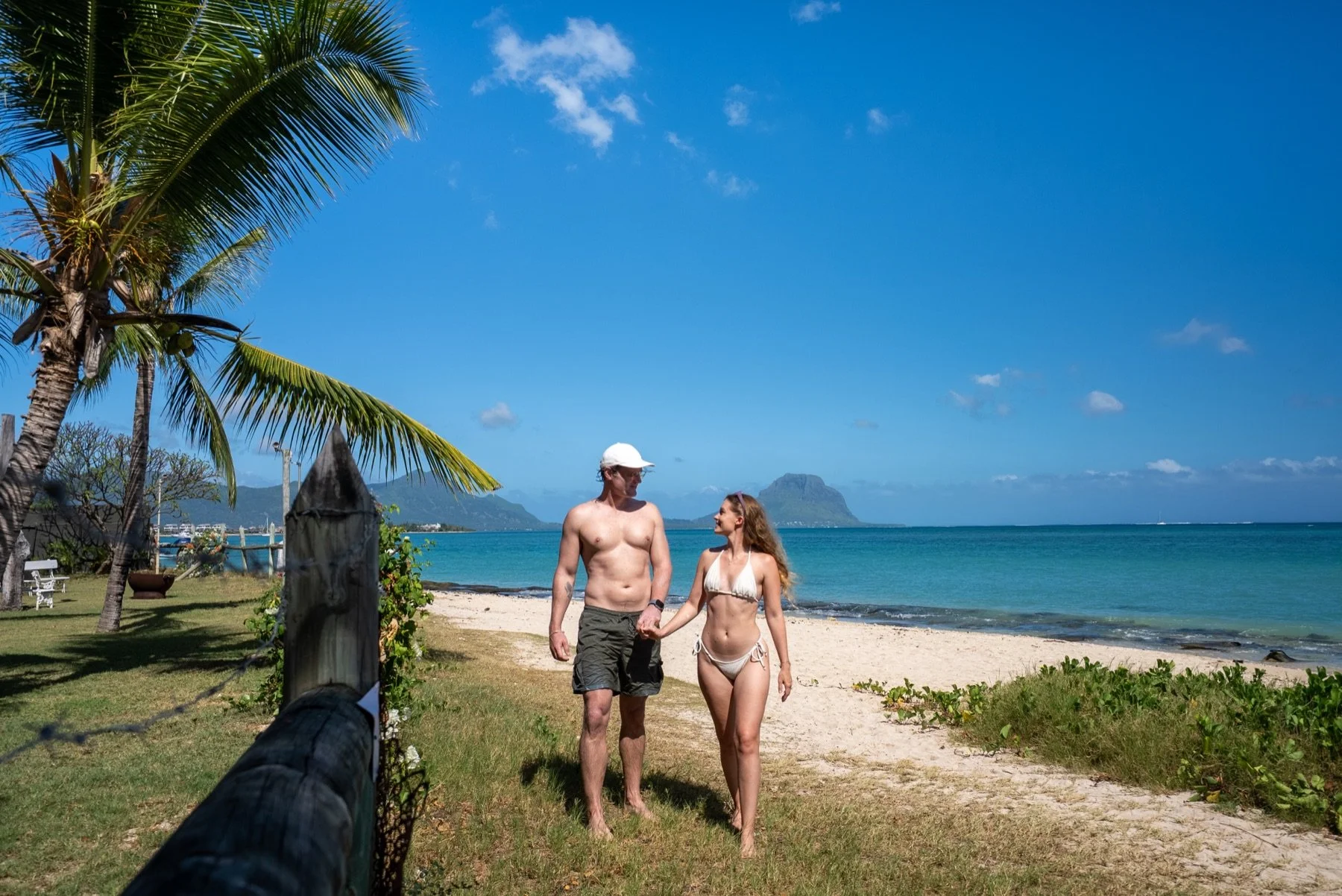
On the beach in Tamarin, our favourite part of the island
Tamarin: the Mauritius nobody shows you
A beautiful drive down the West coast took us to Tamarin, and it might be our favourite part of the island. It's quieter than Grand Baie and feels more like a relaxed coastal community: colourful buildings, surfers, friendly beach dogs and a mix of Mauritians and people who've moved here from all over the world.
We honestly didn't expect a surf scene. Tamarin Beach has darker sand and real waves, with a gentle break for beginners and a serious reef break out back for the pros. Start the morning with a huge breakfast at The Break, a tiny surfer café, then go and watch.
Then there's La Preneuse, which we called our favourite beach in Mauritius at the time. The entrance looks a bit sketchy and there's a sign warning about dangerous currents, so don't swim there. Walk past the old cannons to the right, though, and you'll find a sheltered sandbank with calm blue water and views of Le Morne.
Our first stay here was a four-bedroom villa with a pool and garden, shared with our friends Laura and Finn. Tamarin has loads of villas and Airbnbs, which makes it great value for families and groups. The Super U nearby has everything you need, and some things were even cheaper than back home in South Africa.
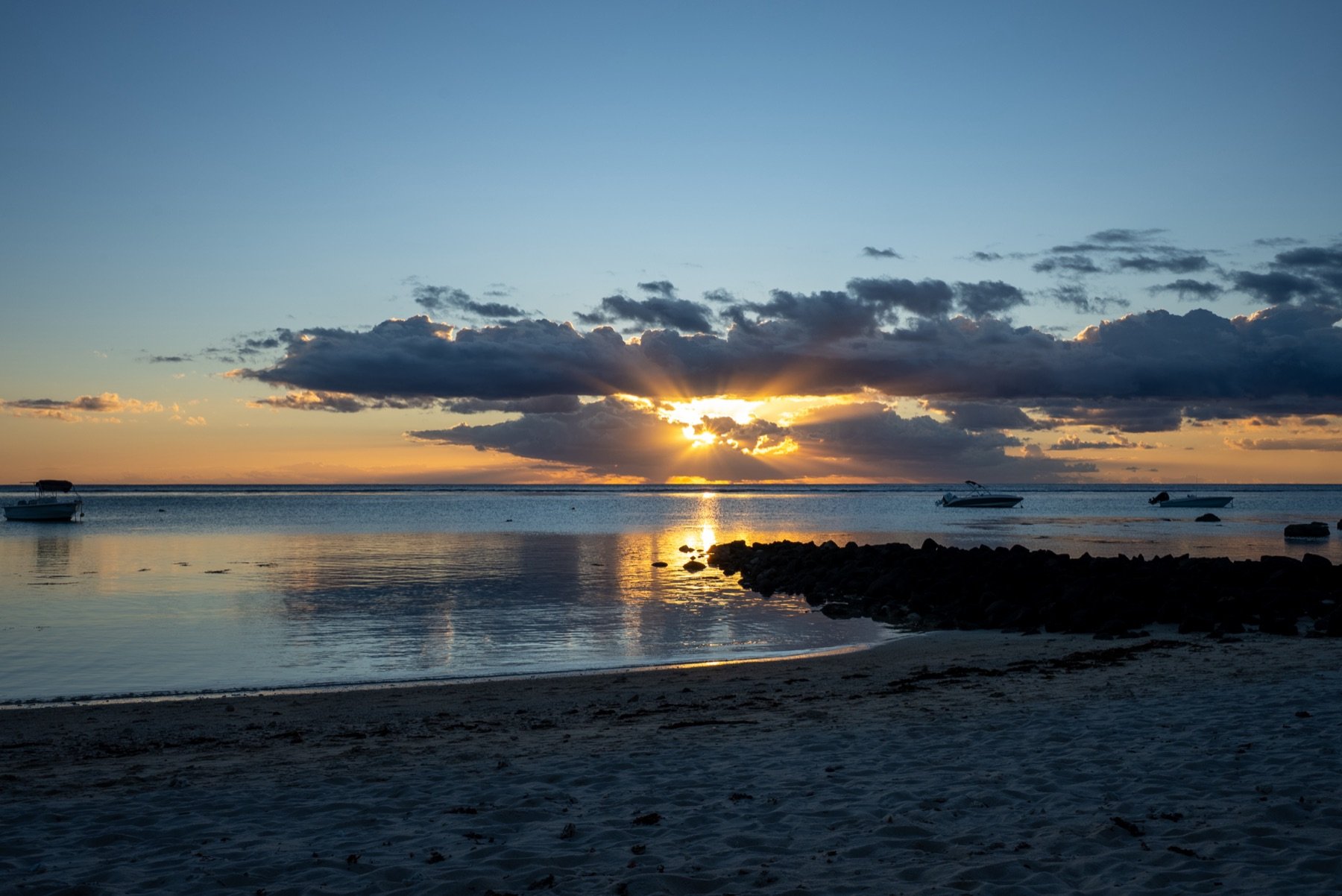
Sunset on the beach in Tamarin
A catamaran day
Everyone told us a catamaran trip was a must, and they were right. Ours was this cruise from the West coast: snorkelling, turtles swimming past the boat, free-flowing drinks, a barbecue lunch on board and a stop on a little island for coconuts. It's one of the two best catamaran trips we've ever done.
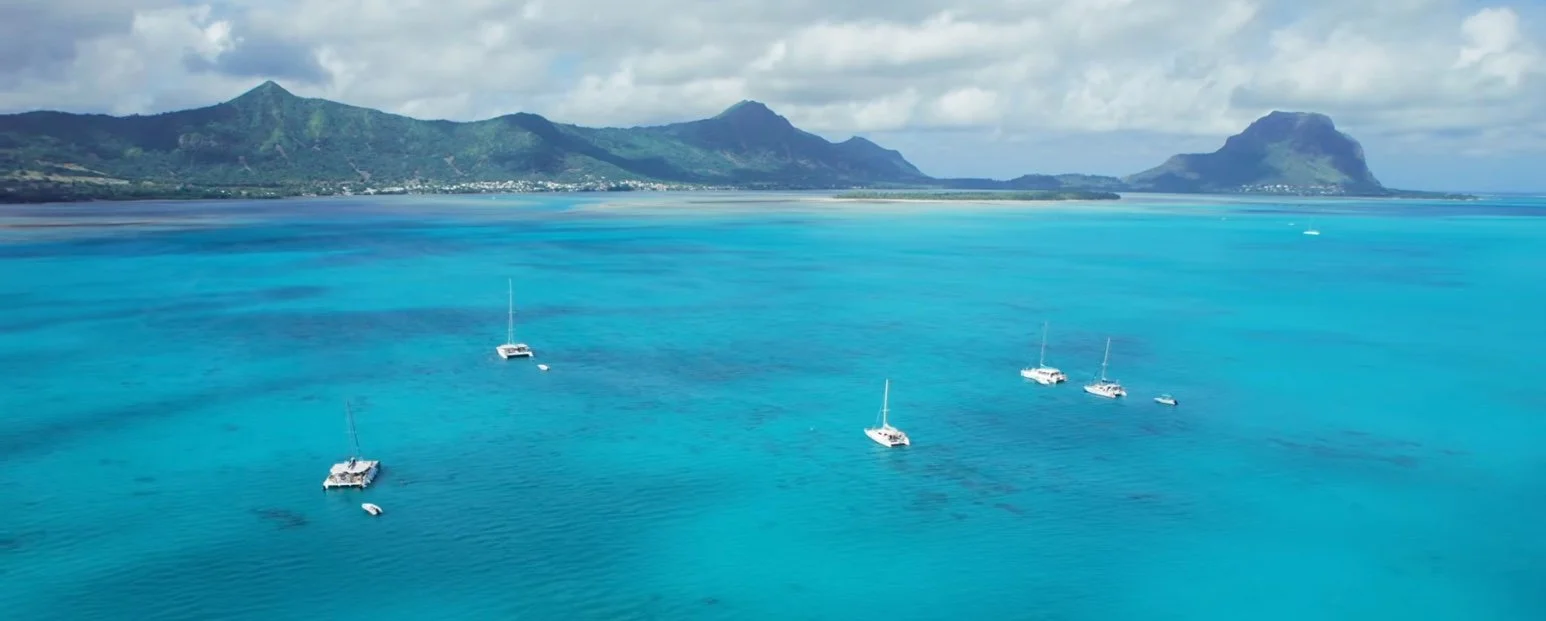
Catamarans on the lagoon, with Le Morne in the distance
Tamarind Falls
This one really surprised us. We only did the first three falls of the Tamarind Falls hike, also known as 7 Cascades. It's 2.2 km and took us about an hour and a half, including a swim. It's steep and technical in places, and it'll be muddy after rain, but we thought it was a must-do. Go in the morning or the middle of the day, so the pools are in the sun.
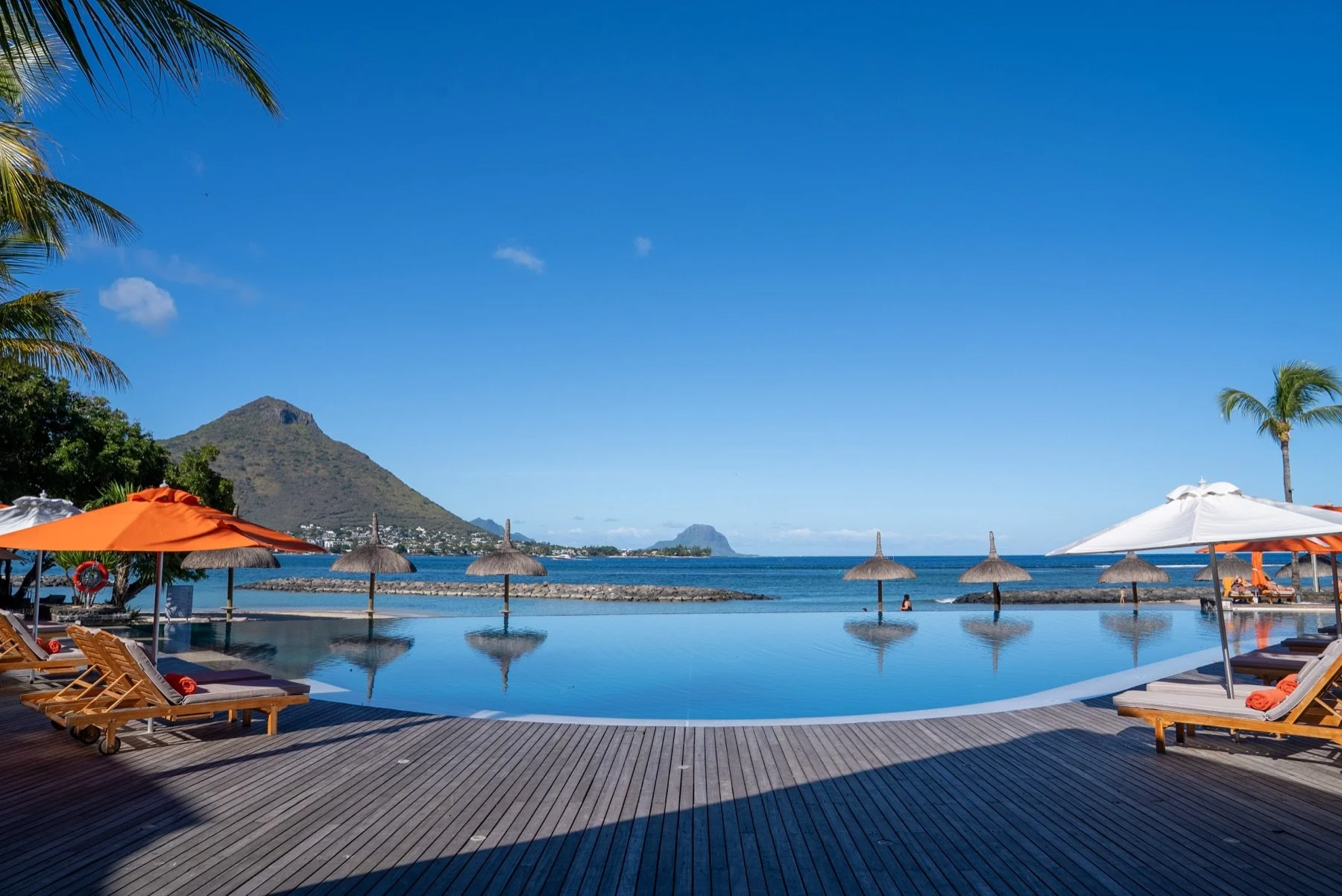
The infinity pool at Sands Suites Resort, our one resort stay
Flic en Flac: trying the resort life
We wanted to see what the fuss was about, but we left it too late and found almost everything fully booked, even in May. We booked a room at the last minute at Sands Suites Resort & Spa on half board. We paid for this one ourselves, which meant we did the very rare thing of not working and lying on a beach all day.
We totally get it now. The staff brought cold towels and cake to our sun loungers, delivered lunch to the beach on a full table with a tablecloth, and let us use the pool and showers all day after we'd checked out. They even cleaned our sunglasses. It's some of the best service we've had anywhere.
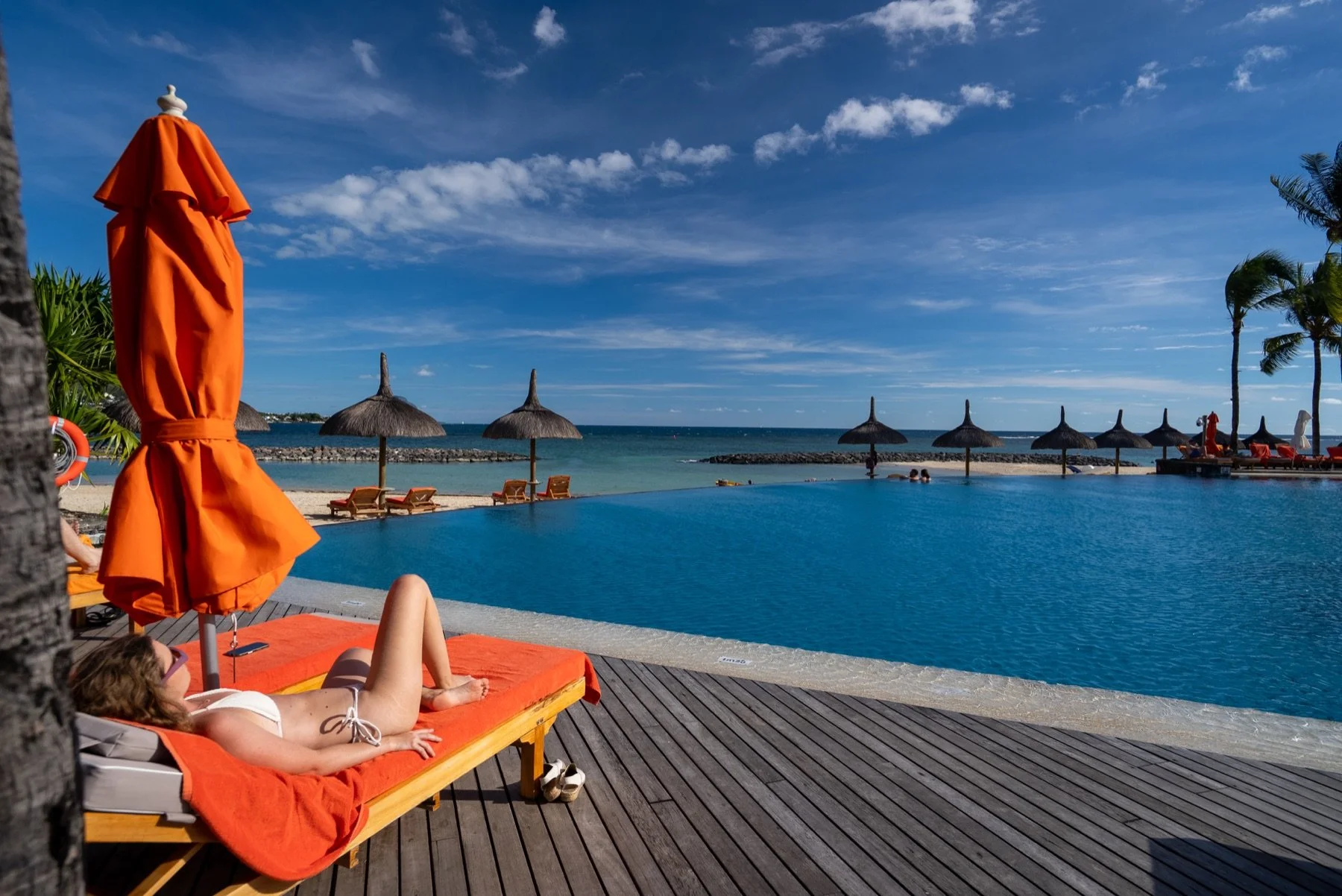
Deck, pool and the bright orange loungers at Sands
A few honest notes. Sands is closer to Tamarin than the middle of Flic en Flac, and there are rocks in front of the beach, so some resorts further up have flatter sand and more open views. Beers were about $8 or $9. Men should pack long trousers and closed shoes, because there's a dress code at dinner.
As for the main area of Flic en Flac, it's not really our cup of tea. It reminded us of Phuket: casual, busy and built around holidaymakers. It does have its place, though. There are plenty of cheaper stays within walking distance of a really beautiful beach, and it's a great place to watch the sunset. Tiger's Milk does a good burger if you're craving a taste of South Africa.
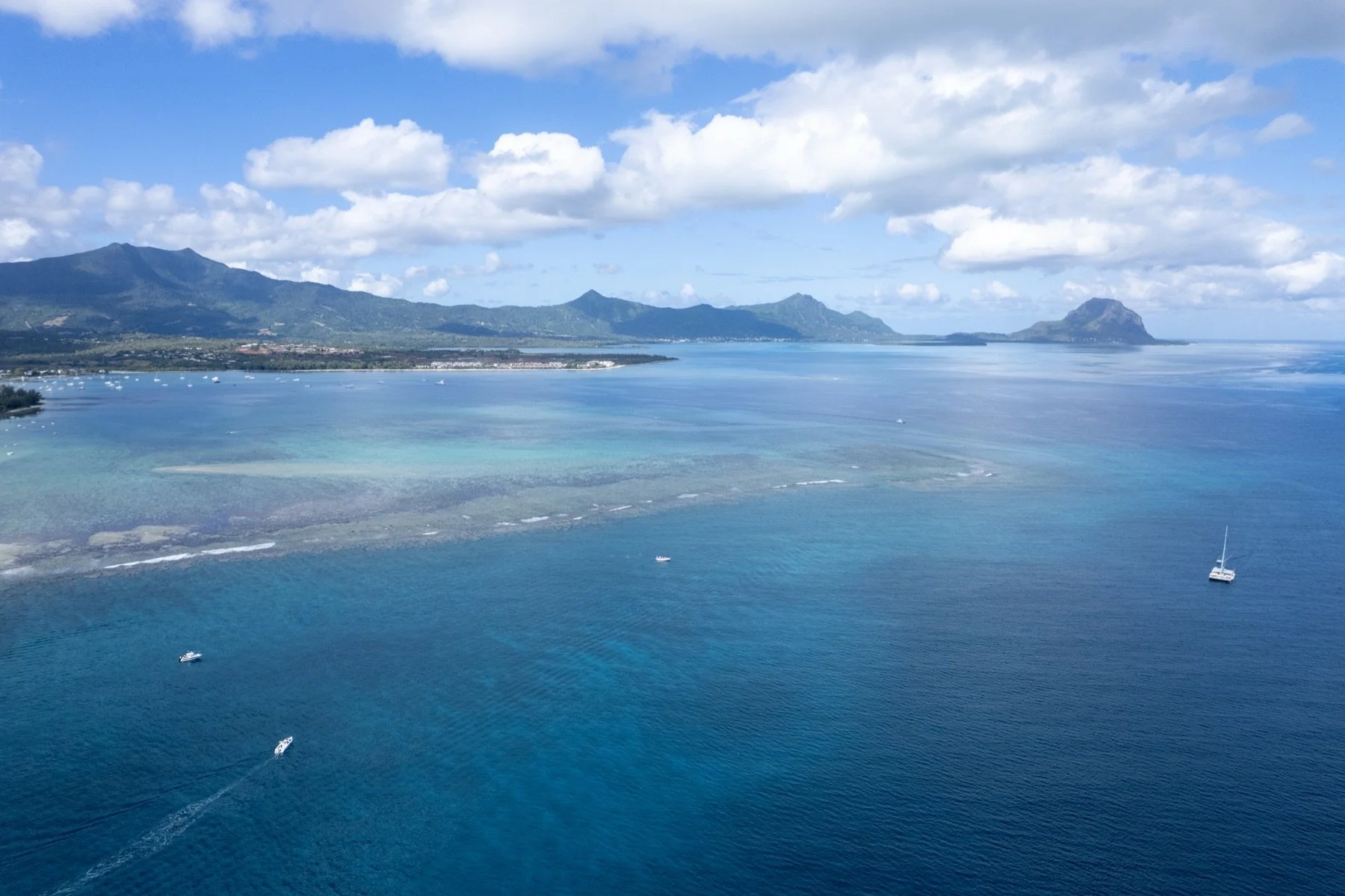
Looking across the lagoon towards Le Morne from the air
Le Morne, and what we'd do differently
We'd deliberately left the end of our trip open, and that was a mistake. Le Morne is one of the most popular places to stay on the island, and by the time we looked, almost everything was fully booked. It's also a lot more expensive: most resorts were nearly double what we'd paid at Sands.
So we went back to Tamarin, where our friends Tim and Novi joined us on a whim. Together we found this three-bedroom beachfront villa on Booking.com for about $150 to $200 a night, with a garden, a braai and the use of a pool. The owner had dropped the price because he had no bookings that week, so we got very lucky, and you might not find that rate.
We still spent a whole day at Le Morne Public Beach, and it's one of our favourite beaches on the island: water like a swimming pool, with the mountain right behind it. The whole beach is public, so you don't need to stay at a resort. Snorkel near the Dinarobin in the morning, when turtles are often there. Looking back, we really wish we'd booked two or three nights in Le Morne.
We'd also book the underwater waterfall flight much earlier. It's an optical illusion caused by sand flowing over the edge of an underwater shelf, and the only way to see it properly is from a seaplane or helicopter. There are very few seats and we missed out completely, so arrange it well before you arrive.
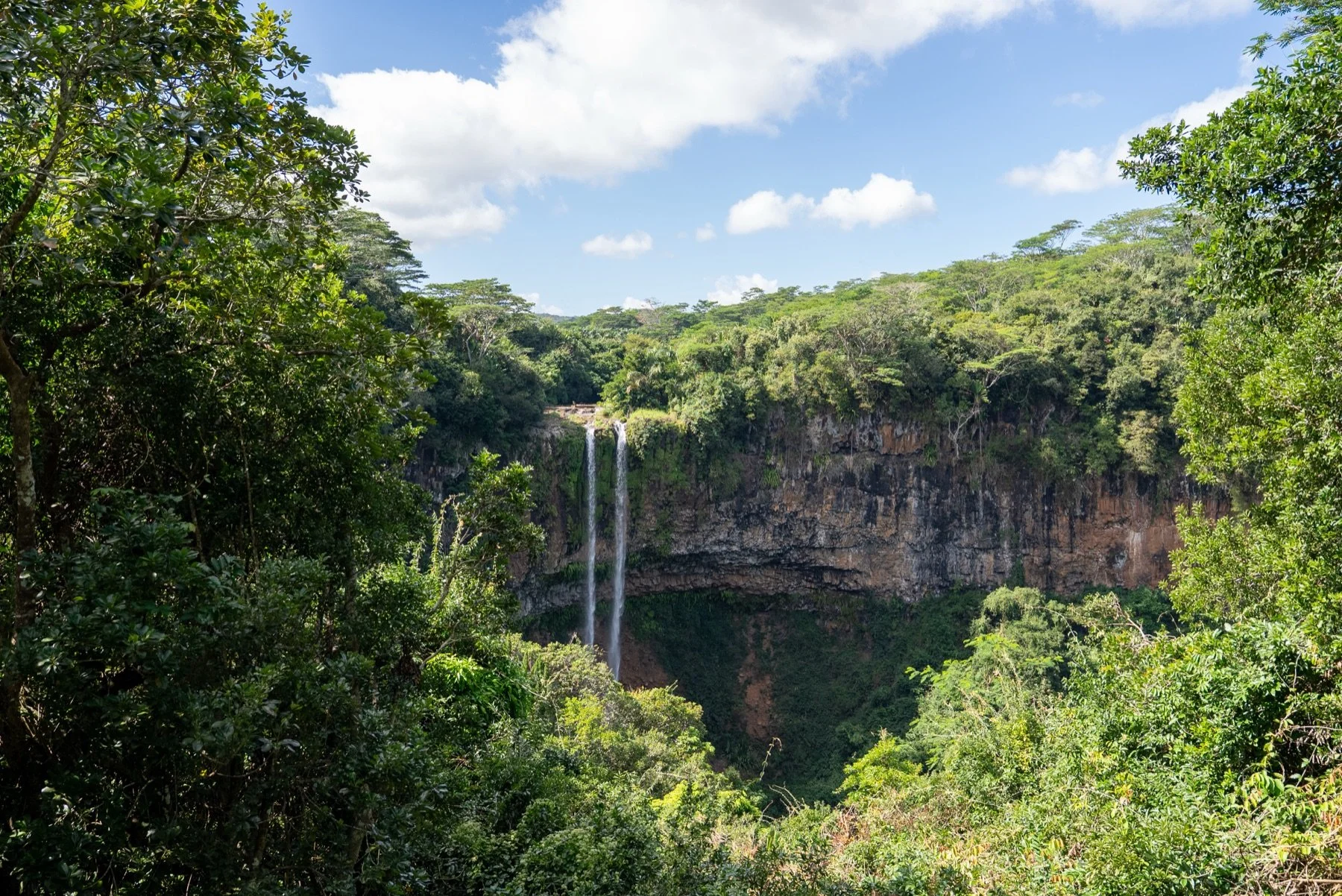
Chamarel Waterfall, which drops almost 100 metres
Chamarel: waterfalls, coloured earth and lunch with no menu
On our last sightseeing day we had breakfast at Kind Coffee in La Gaulette (get the scrambled eggs), then drove up to the viewpoint over the lagoon. Do this in the morning: the water looks far bluer before the afternoon glare sets in.
The Seven Coloured Earth Geopark and Chamarel Waterfall, which drops almost 100 metres, are close together. The dunes get their red, brown, yellow, blue and violet colours from volcanic rock breaking down into clay, and there are more giant tortoises here too.
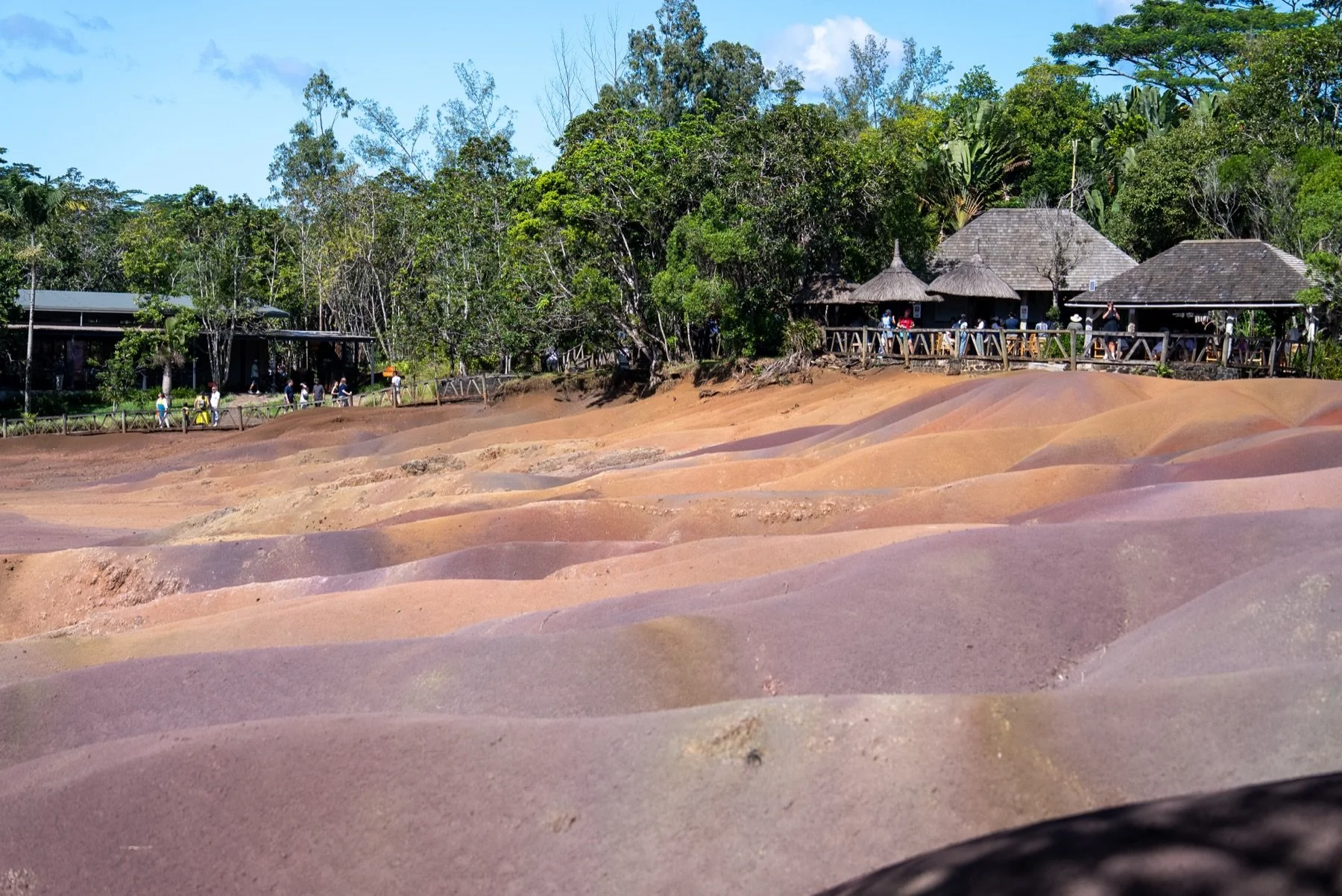
The Seven Coloured Earth Geopark at Chamarel
Afterwards we had lunch at Palais de Barbizon, a small family-run restaurant with basically no menu. You sit down and they serve whatever they've cooked that day. It was delicious, and it was a lovely last taste of the local side of Mauritius.
The one thing we wouldn't recommend
We booked what we thought was a whale-watching trip with some dolphin swimming and snorkelling. In reality, swimming with whales became the main focus. For almost two hours, several boats searched for the whales, raced towards them whenever they surfaced and encouraged guests to jump in nearby. Swimming with whales isn't permitted in Mauritius. We chose not to get in, the Coast Guard came out to enforce the ban and it all got quite chaotic. Do your own research, but we wouldn't recommend any trip where getting in the water with whales is part of the plan.
Want our exact plan?
We've put everything from this trip into our Mauritius Destination Guide: a 10-day route day by day, our Google Map with 60+ places Claire pinned along the way, 30+ hand-picked stays across three budgets and the toolkit we used to plan it all.
You can also browse our Mauritius wishlist on GetYourGuide, which includes the food tour and catamaran we booked.
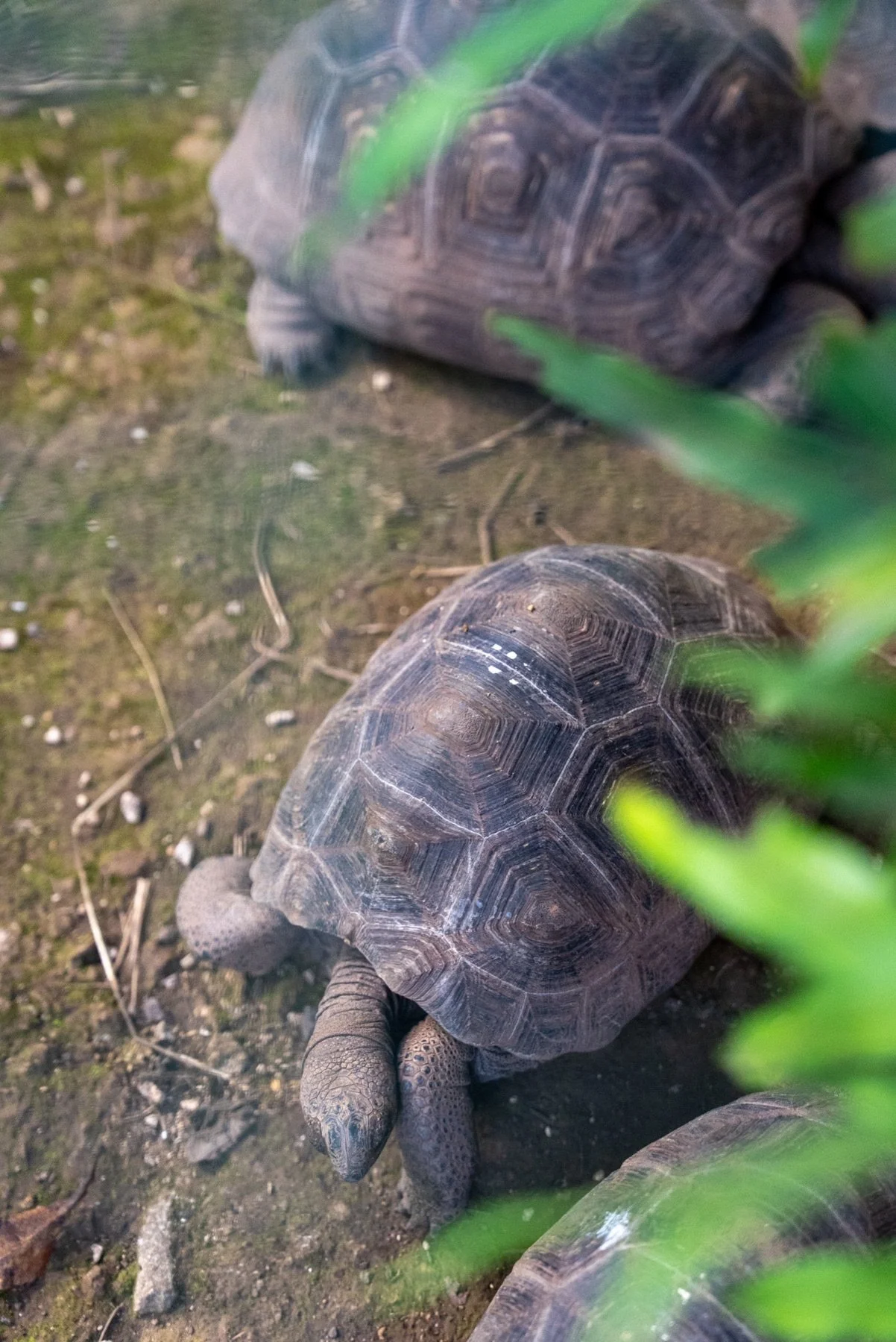
Giant tortoises at the Seven Coloured Earth Geopark
Best time to visit Mauritius
We went in mid-May and the weather was close to perfect: warm days, cooler evenings and very little humidity. April to June and September to December are the sweet spots. Summer (November to April) is hot and humid, with cyclone season and the wettest weather around February and March.
We skipped the East coast on this trip. It's more exposed to the South-East trade winds, especially from June to September. That's great for kitesurfing and sailing, but we wanted calm water for swimming and snorkelling, so we stuck to the North and West. It does mean there's a whole side of the island left for next time.
How to get around Mauritius
Rent a car. In hindsight it was essential. There's no reliable ride-hailing app, taxis were quoted at around €60 one way, and we'd have needed more than five transfers. We booked a little Suzuki through Discover Cars for about €15 a day, and it gave us the freedom to stop at any beach we liked. The roads are excellent, you drive on the left, and locals drive fast, so stay in the slow lane on the motorway.
What Mauritius costs
It's not a cheap island, because so much is imported, but it doesn't have to be a luxury trip either. Stay in an apartment, cook some of your meals, eat local food and rent a car, and it becomes much more manageable. Taxis, beach clubs and resort restaurants are where the costs climb. A big grocery shop for a few days cost us about $50.
Packing essentials
Your own snorkel gear, or buy it when you arrive
Reef shoes: as we joked, the biggest danger here is stepping on a sea urchin
Soap, if you're staying somewhere budget
An eSIM like Holafly (code RHETTANDCLAIRE) for maps and Waze
Travel insurance. We've used SafetyWing for six years.
Final thoughts
We came to find out whether there was more to Mauritius than luxury resorts, honeymoons and beautiful beaches, and the answer is very clearly yes. The beaches are every bit as good as people say, but it was the food, the culture, the mountains and how calm and safe it felt that made us fall in love with it. Coming from South Africa, we noticed ourselves relaxing in a way we don't always get to back home.
For us it was an easy ten out of ten, and it's somewhere we can picture coming back to every year with friends.
Start with our free Essential Mauritius Guide, and if you want the whole trip planned for you, our Mauritius Destination Guide has the route, the map and the stays. Bon voyage!