Some links in this post are affiliate links. If you book or sign up through them, we earn a small commission at no extra cost to you. It helps us keep making free guides and videos.
Japan sat at the top of our bucket list for years, and to be honest, we were a little worried it couldn't live up to the hype. Well, it absolutely did. What actually surprised us wasn't the neon or the bullet trains. It was how calm the country feels, even in the busiest places, and how much care goes into the smallest things.
This is the two-week route we took, from Tokyo down to Osaka and Kyoto, then out to Mount Fuji and up into the mountains of Nagano. Below is what we loved, what we'd book again, and what we'd tell a friend before they go.
Watch the full trip on our YouTube channel →
Our two-week Japan route at a glance
Tokyo (4 days): temples, teamLab, Shibuya, a sushi class and a night in a capsule hotel
Osaka (2 days): the best food tour we've done anywhere, Dotonbori and Osaka Castle
Nara (day trip): bowing deer and a giant bronze Buddha
Kyoto (2 days): kimonos, a tea ceremony and Fushimi Inari at sunrise
Mount Fuji (3 days): Chureito Pagoda, Lake Kawaguchiko and an onsen guesthouse
Nagano (2 days): a traditional ryokan and the snow monkeys
If you only have ten days, we'd trim Tokyo to three nights and Fuji to two. We wouldn't cut Nagano. It ended up being one of our favourite parts of the trip.
Planning your own trip? Grab our free Essential Japan Guide: three pages on visas, the 2026 tax changes, when to go, trains and money.
Tokyo: ancient and futuristic, sometimes on the same street
Give Tokyo four days. It's huge, but the trains make it easy, and every neighbourhood feels like a different city.
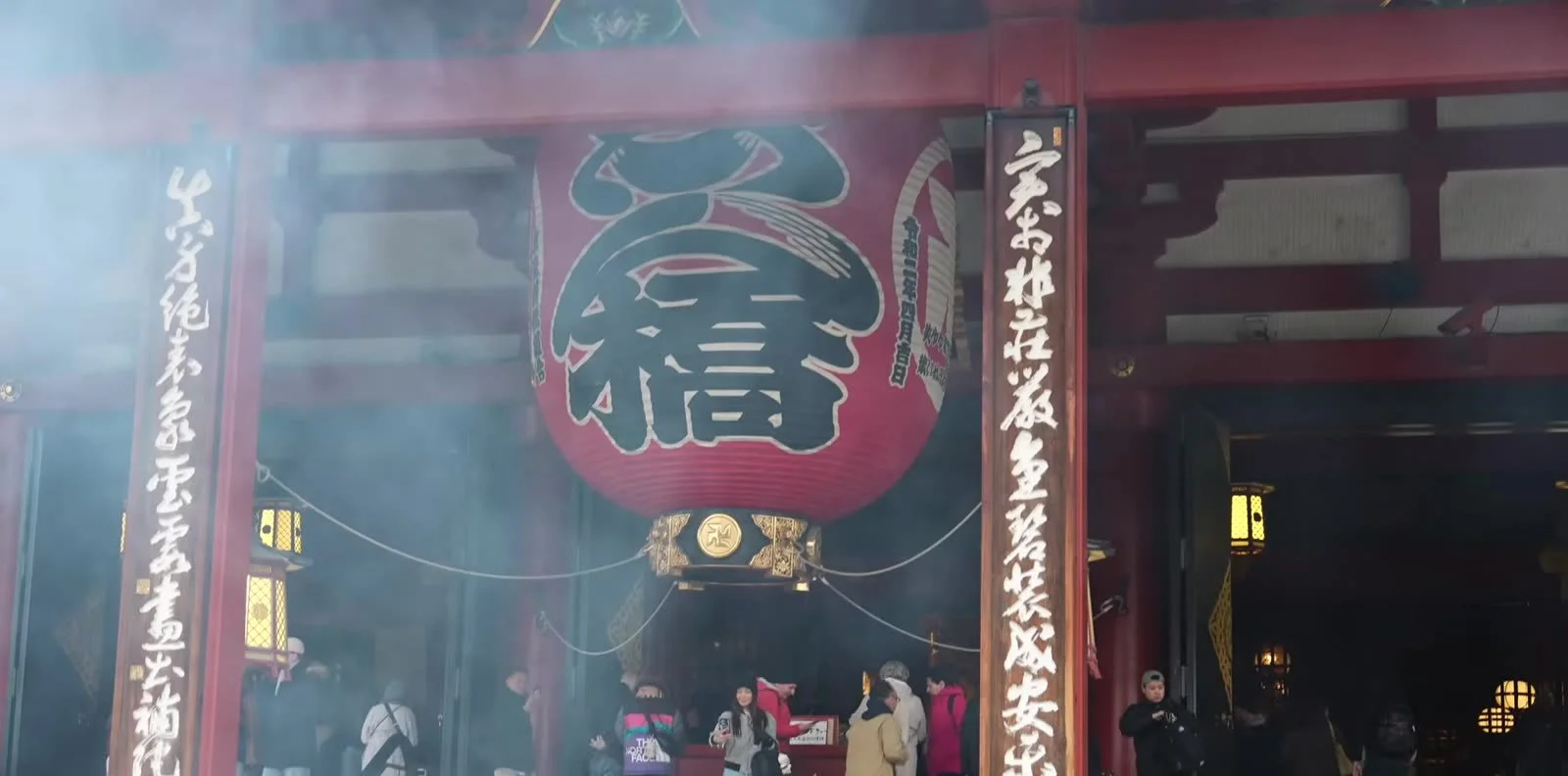
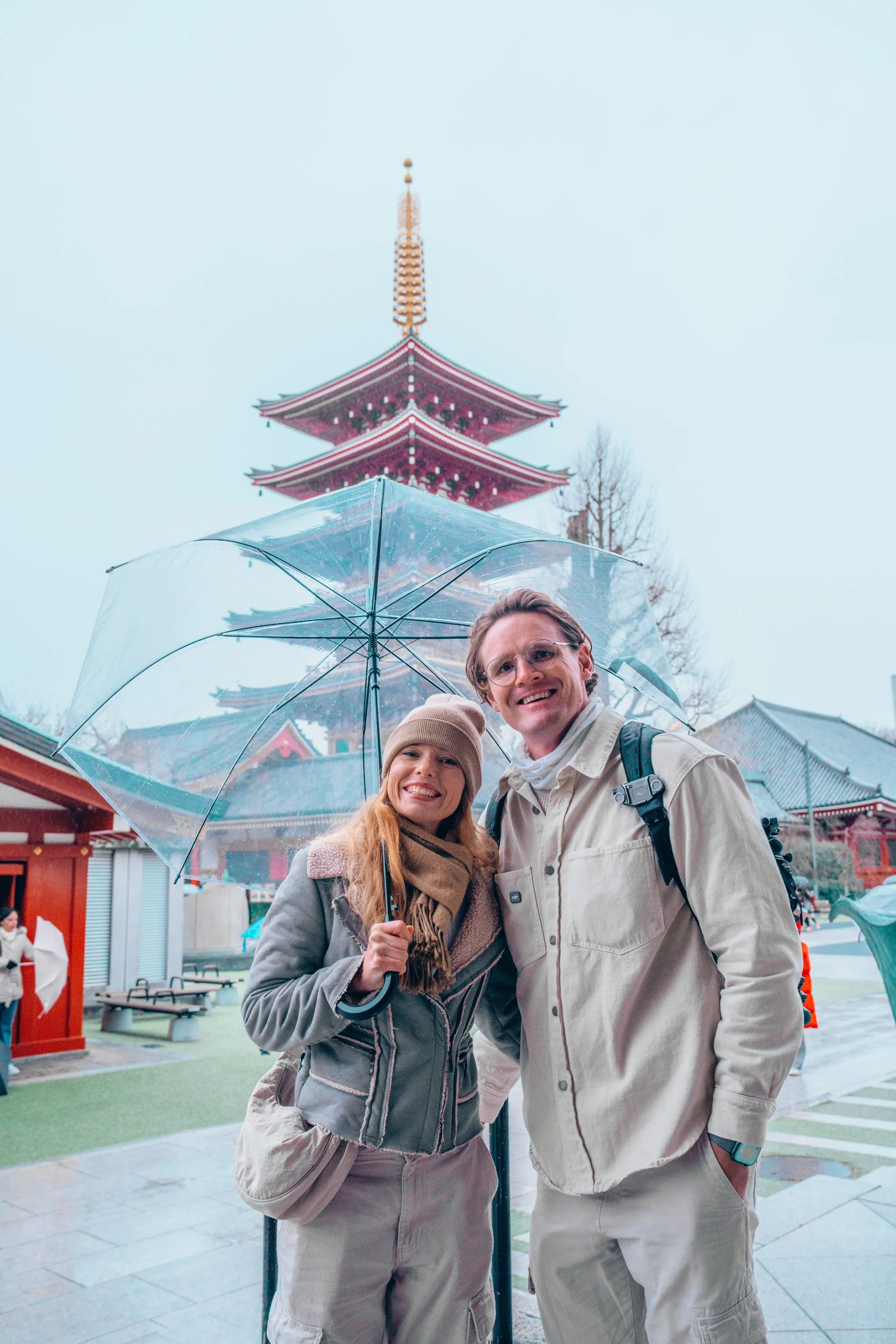
The giant red lantern at Senso-ji, Tokyo's oldest temple
We started where most people do, at Senso-ji in Asakusa, Tokyo's oldest temple. Wash your hands at the fountain, light some incense, then work your way back down Nakamise-dori snacking on grilled mochi. For your first dinner, Ichiran Ramen is a rite of passage: you order from a vending machine and eat in your own little booth. It sounds odd. It's brilliant after a long flight.
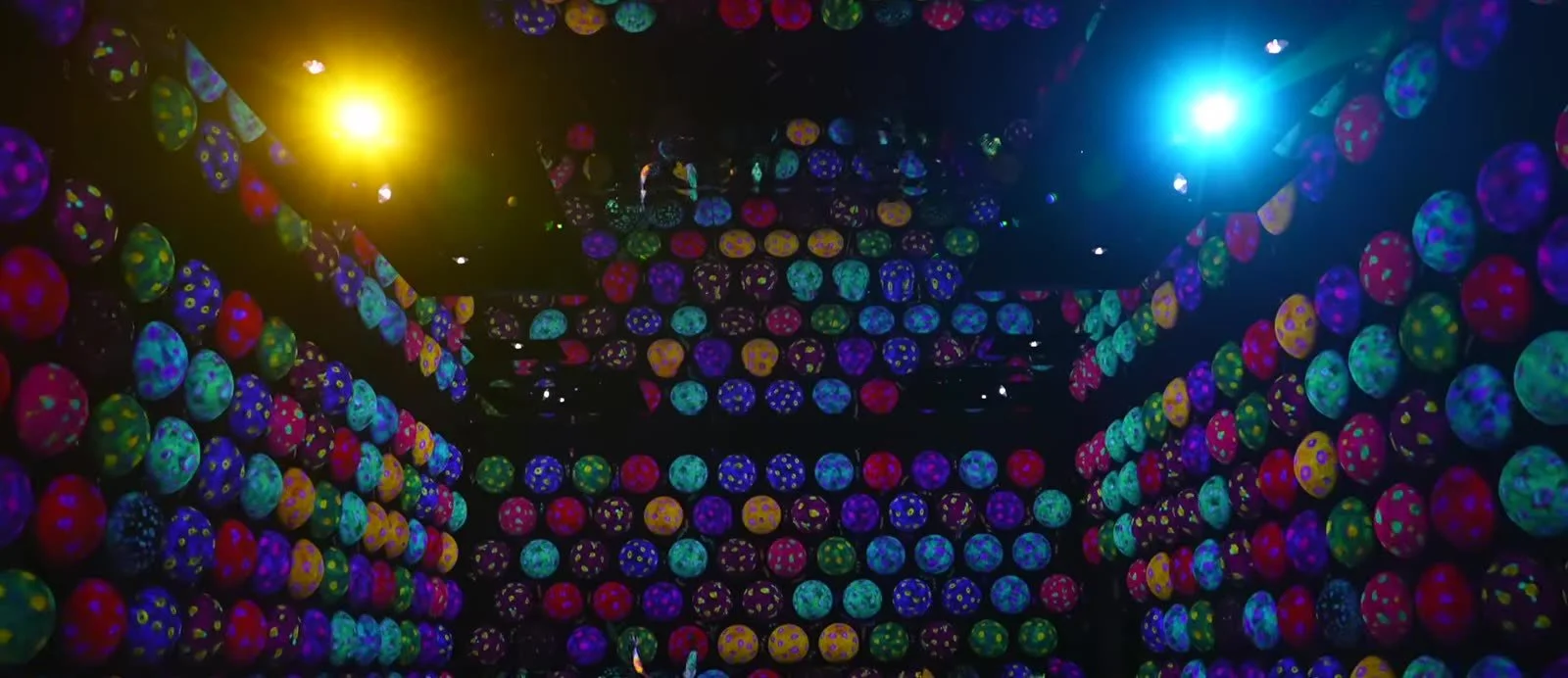
Wandering through the light rooms at teamLab Planets, Tokyo
Two futuristic highlights: we went up the Tokyo Skytree about 30 minutes before sunset to watch the city switch from gold to neon, and on another evening we headed to teamLab Planets, where you walk barefoot through water and mirror rooms full of digital flowers. It's a bit out of the way, but it was more moving than we expected. Book ahead, because it sells out.
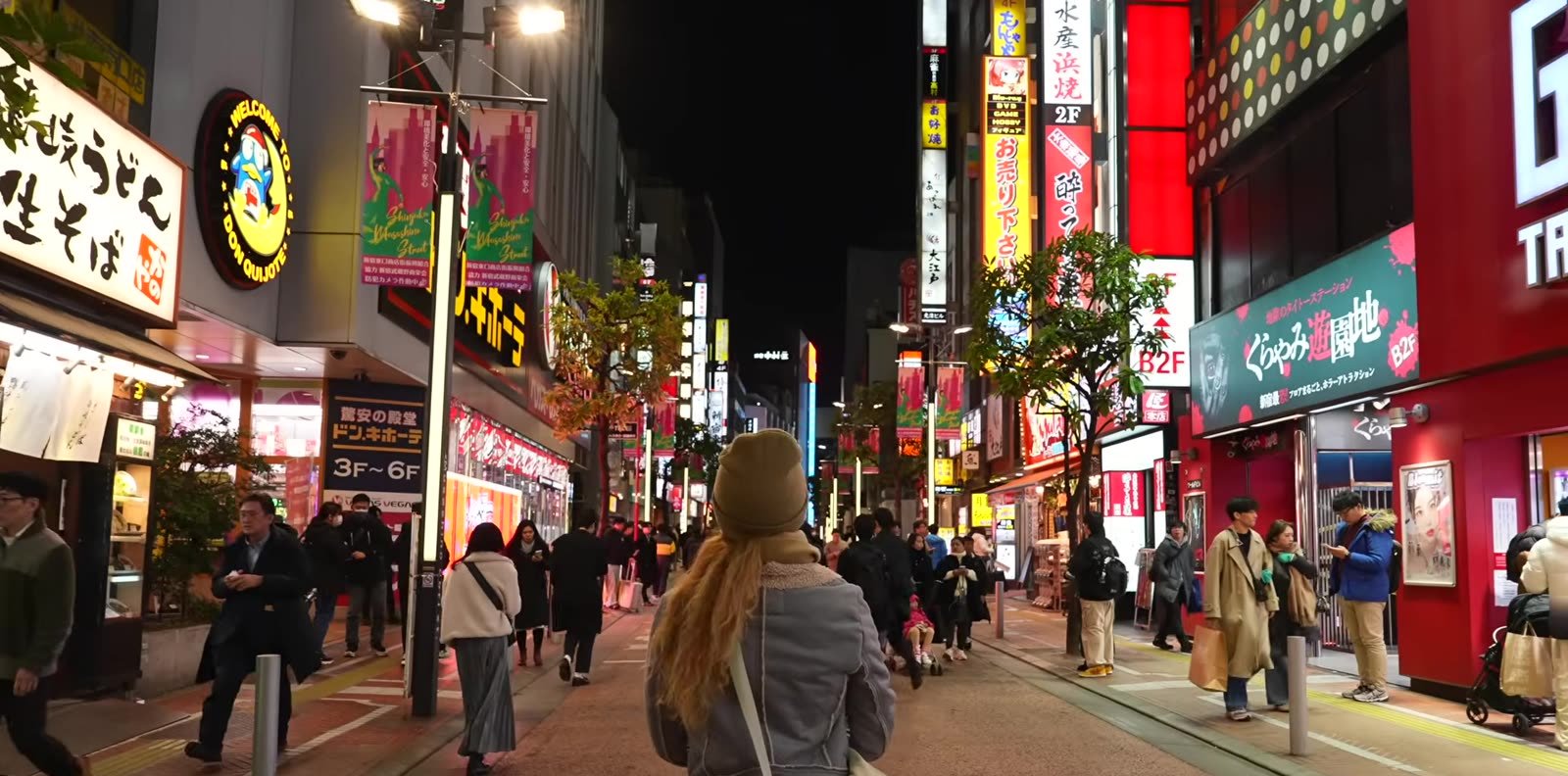
Shinjuku's neon on our first night in Tokyo
That first night we joined a Tokyo food tour through Shinjuku's Omoide Yokocho, the smoky little alley of yakitori stalls, then saw Shibuya Crossing in the rain. The next day was robots and arcades: coffee served by robots at the DAWN Avatar Robot Café, then the claw machines of Akihabara.
Our Tokyo highlight was a sushi-making class at Tsukiji, with a chef who has been making sushi almost all his life. If you want something sillier, there's street go-karting in costume or a Tokyo Drift-style night drive. We didn't book the karts in time, so plan ahead, and you'll need an international driving permit.
We also spent a night in a capsule hotel, 9h nine hours Akasaka, mostly because we'd always wanted to. It's a good place, it just wasn't for us: men and women sleep on separate floors, and we didn't get much rest. Do it for one night for the story.
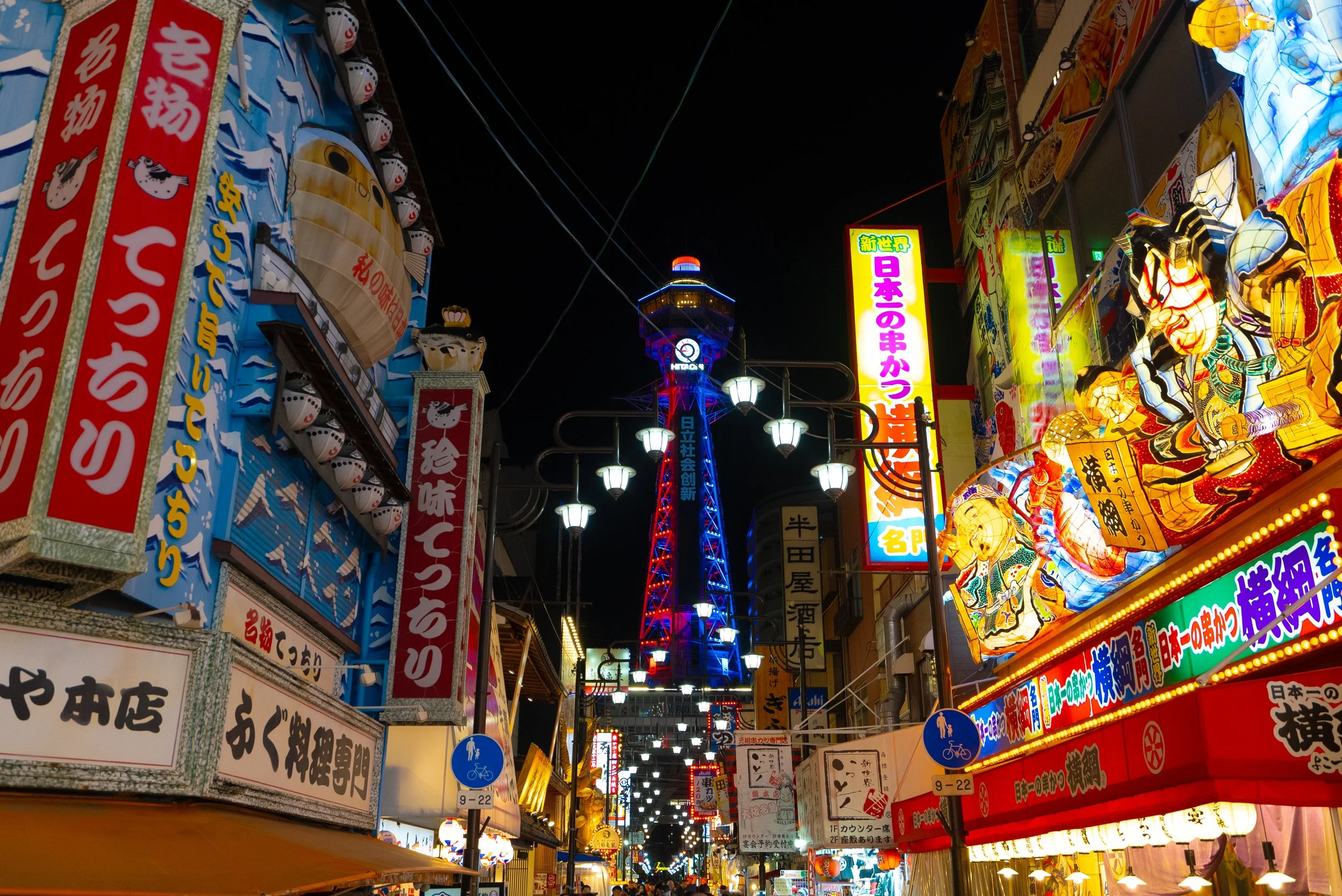
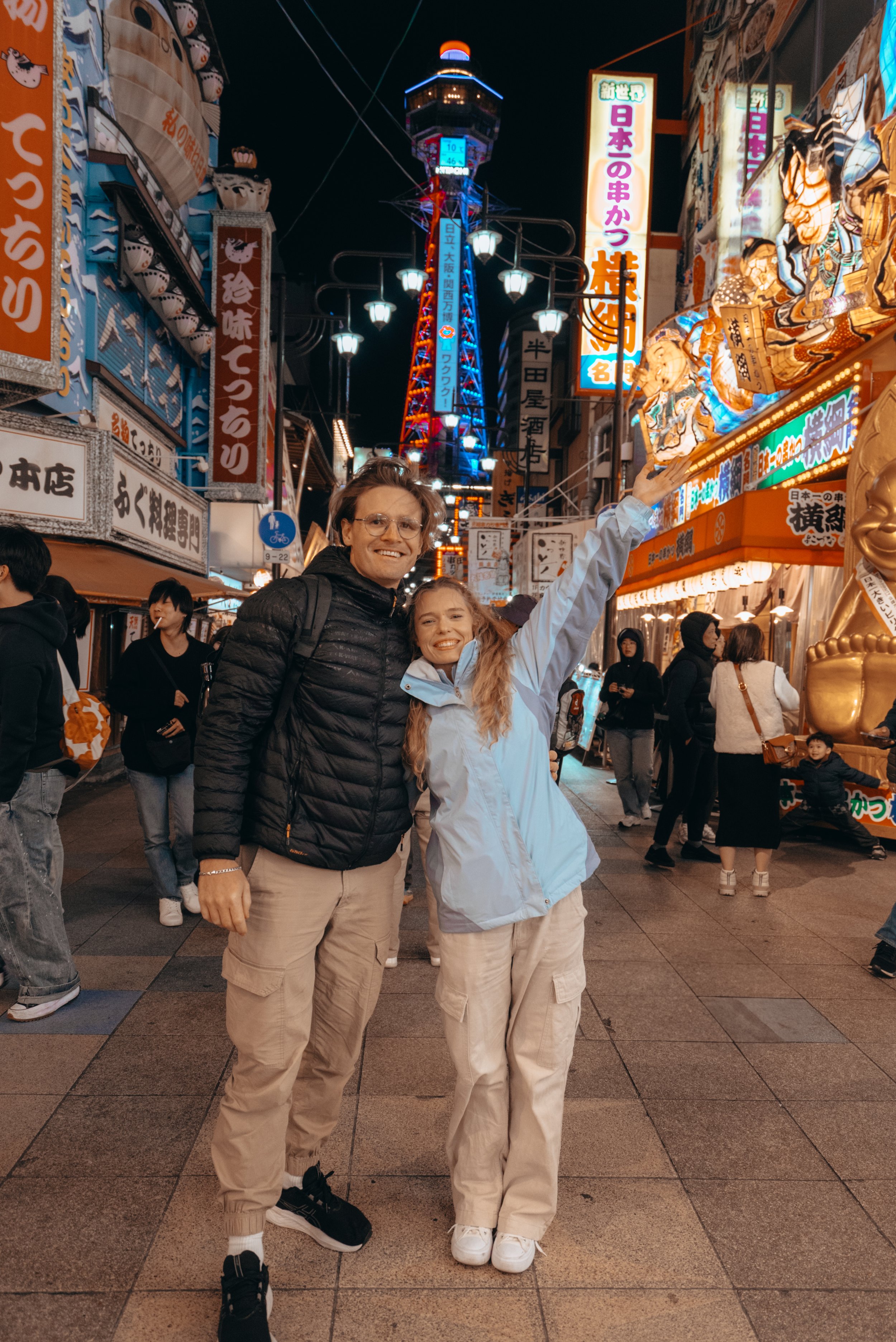
Shinsekai and Tsutenkaku Tower lit up at night, Osaka
Osaka: eat until you drop
If Tokyo is polished, Osaka is loud, friendly and a bit rough around the edges, and we loved it.
The city's motto is kuidaore, "eat until you drop," and our 15-dish food tour in Shinsekai took that seriously. Our guide Andy walked us through beef tendon stew, karaage, yakitori, takoyaki and Osaka's famous kushikatsu (deep-fried skewers of just about anything), with a story at every stop. Honestly, it's one of the best food tours we've done anywhere in the world.

Kushikatsu on our 15-dish food tour in Shinsekai, Osaka
After a day in Nara, we visited Osaka Castle, had okonomiyaki for lunch, ate our way through Kuromon Market (bring cash), and finished in Dotonbori with the obligatory photo in front of the Glico running man. If you like retro games, Space Station bar lets you play '80s and '90s classics for free; just buy a drink.
Our tip: stay near Namba or Dotonbori. You can walk to the food and nightlife, and the trains are right there.

Claire feeding the deer in Nara Park
Nara: an easy day trip
Nara is about 45 minutes from Osaka by train, and it makes an easy, relaxed day out. The deer in Nara Park really do bow for crackers (about 200 yen a pack), although they get pushy fast, so keep the pack close. Walk on to Todai-ji, whose huge wooden hall holds a 15-metre bronze Buddha, then finish at Nakatanidou, the mochi shop famous for pounding rice at lightning speed. Get there early. By midday the park gets very busy.
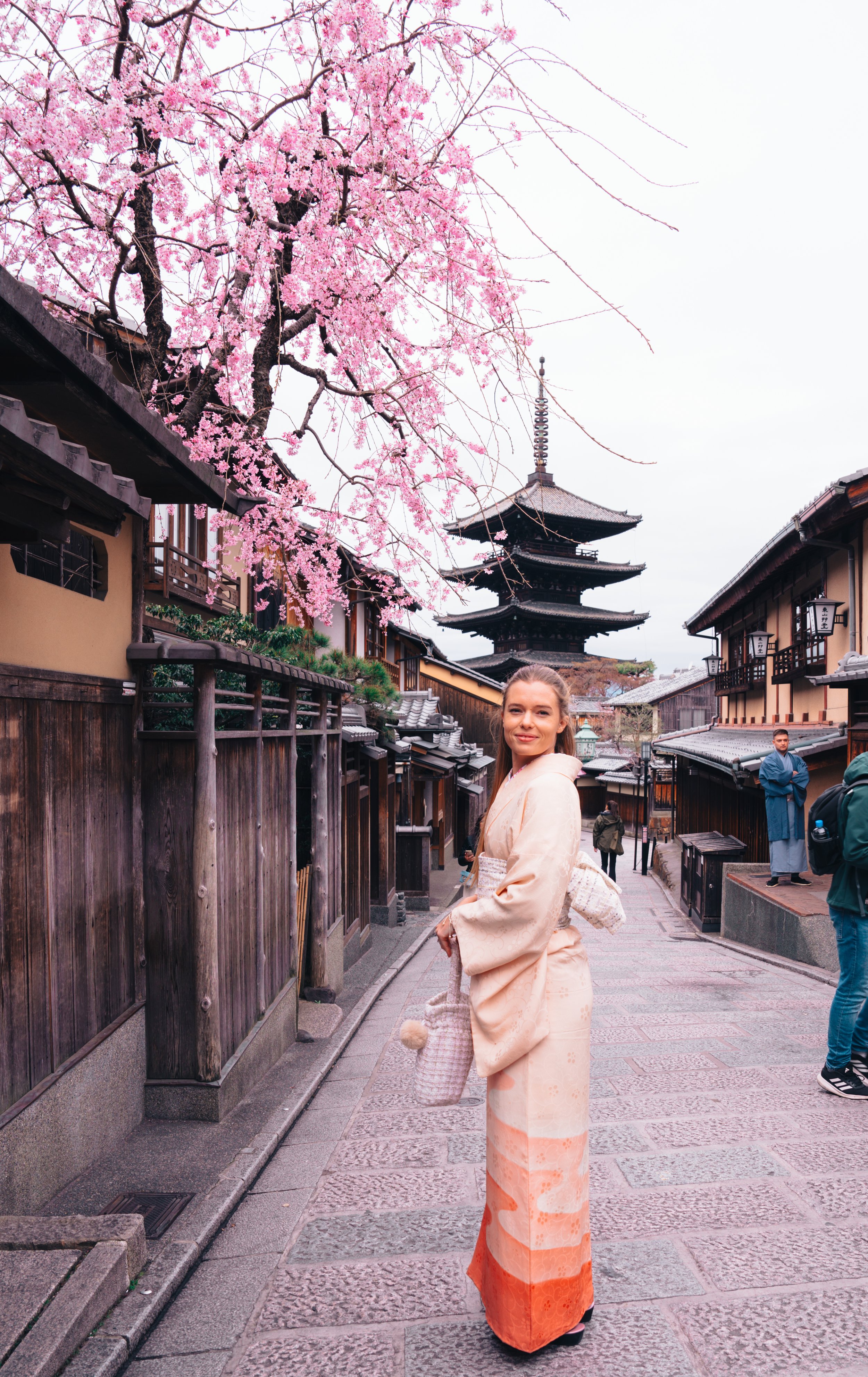
Claire wearing a kimono in Ninenzaka, Kyoto
Kyoto: slow down
Kyoto is the Japan you picture: wooden teahouses, lantern-lit lanes and a temple around every corner.
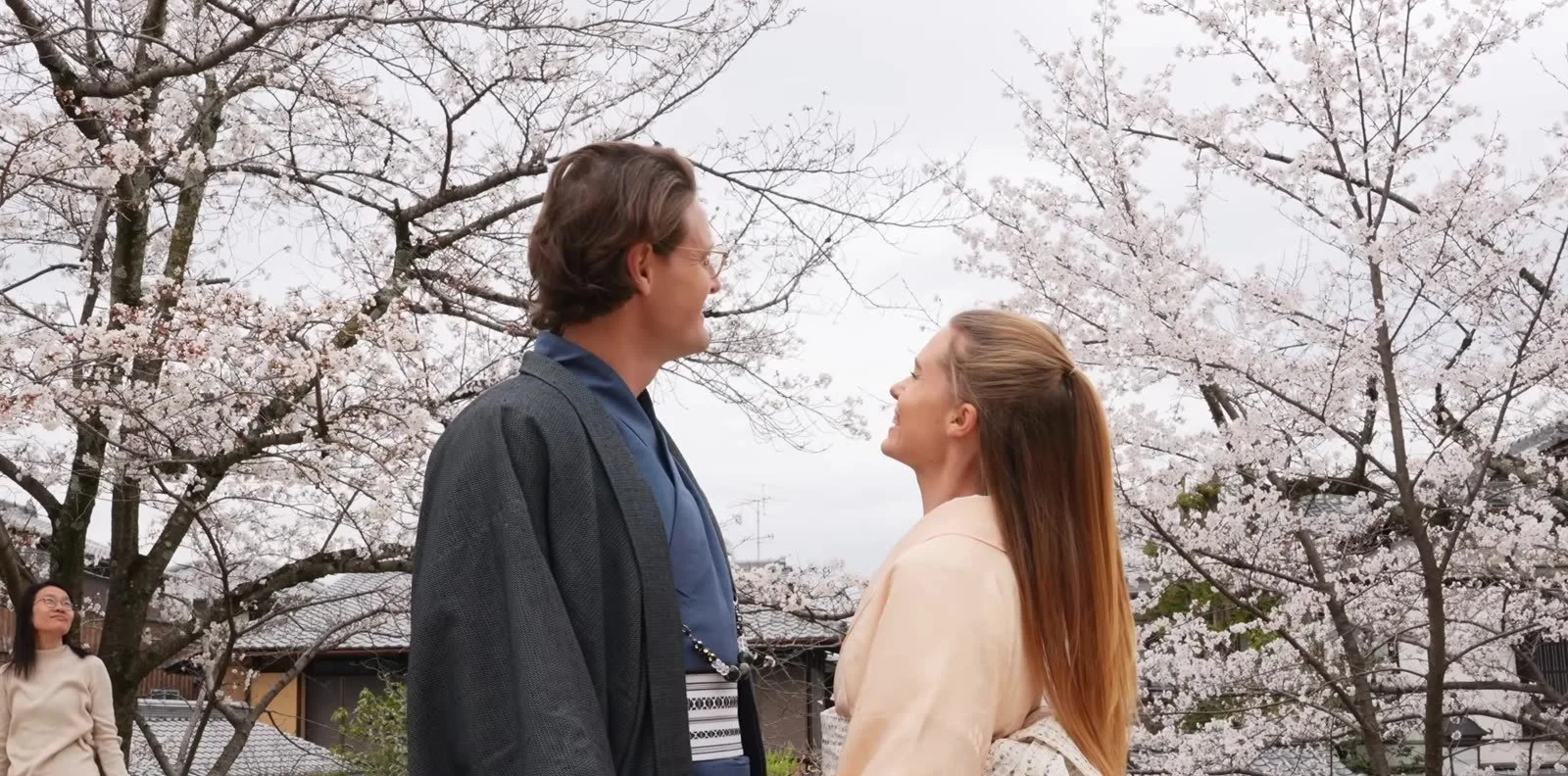
Our kimono day under the cherry blossoms in Kyoto
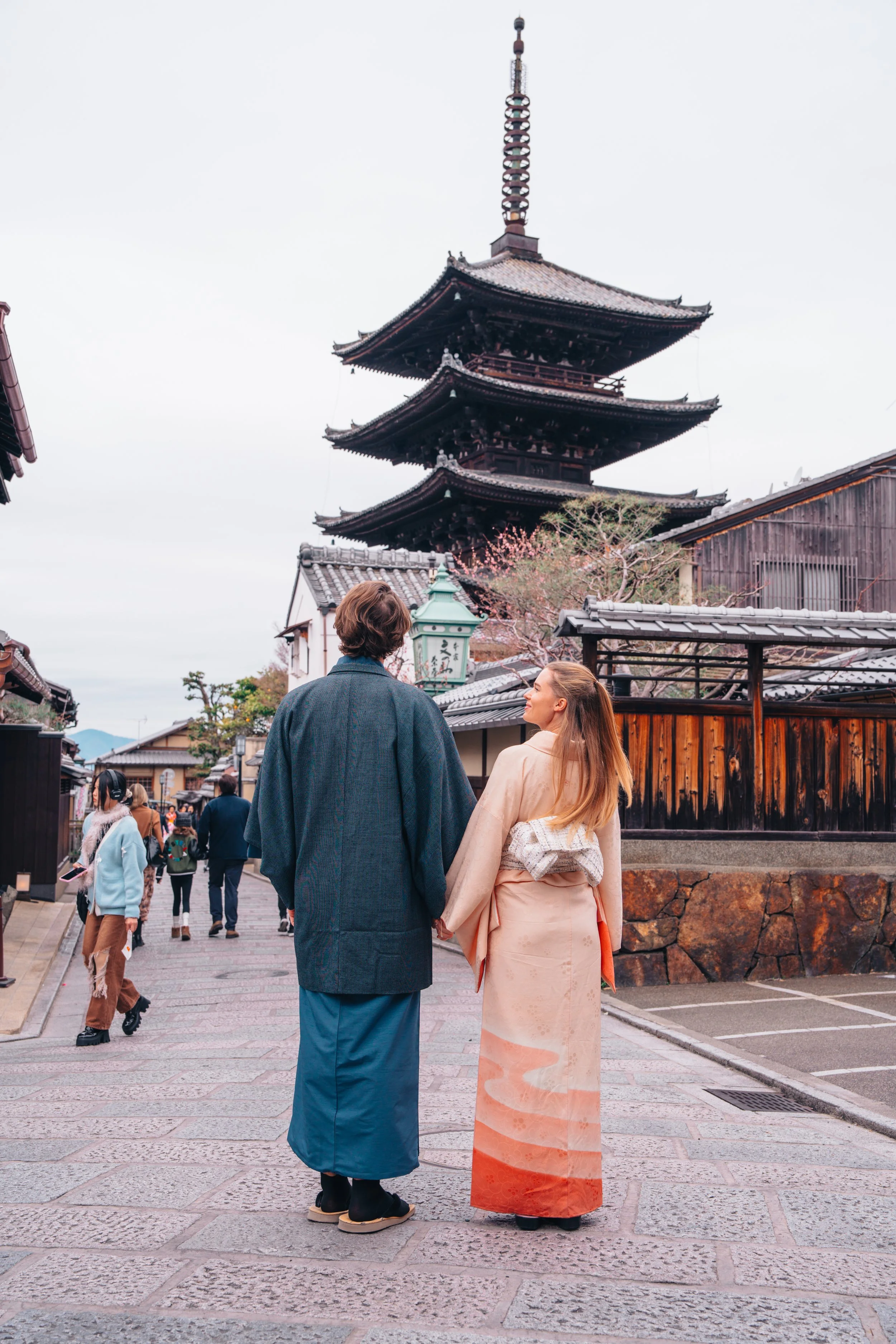
We rented kimonos and walked through Sannenzaka toward the Yasaka Pagoda, then did a one-hour tour of the Samurai & Ninja Museum (yes, you get to throw shuriken) and a traditional tea ceremony. It turned out to be one of the calmest hours of the whole trip, and ours came with a second kimono. Many tea ceremonies don't, so check before you book both.
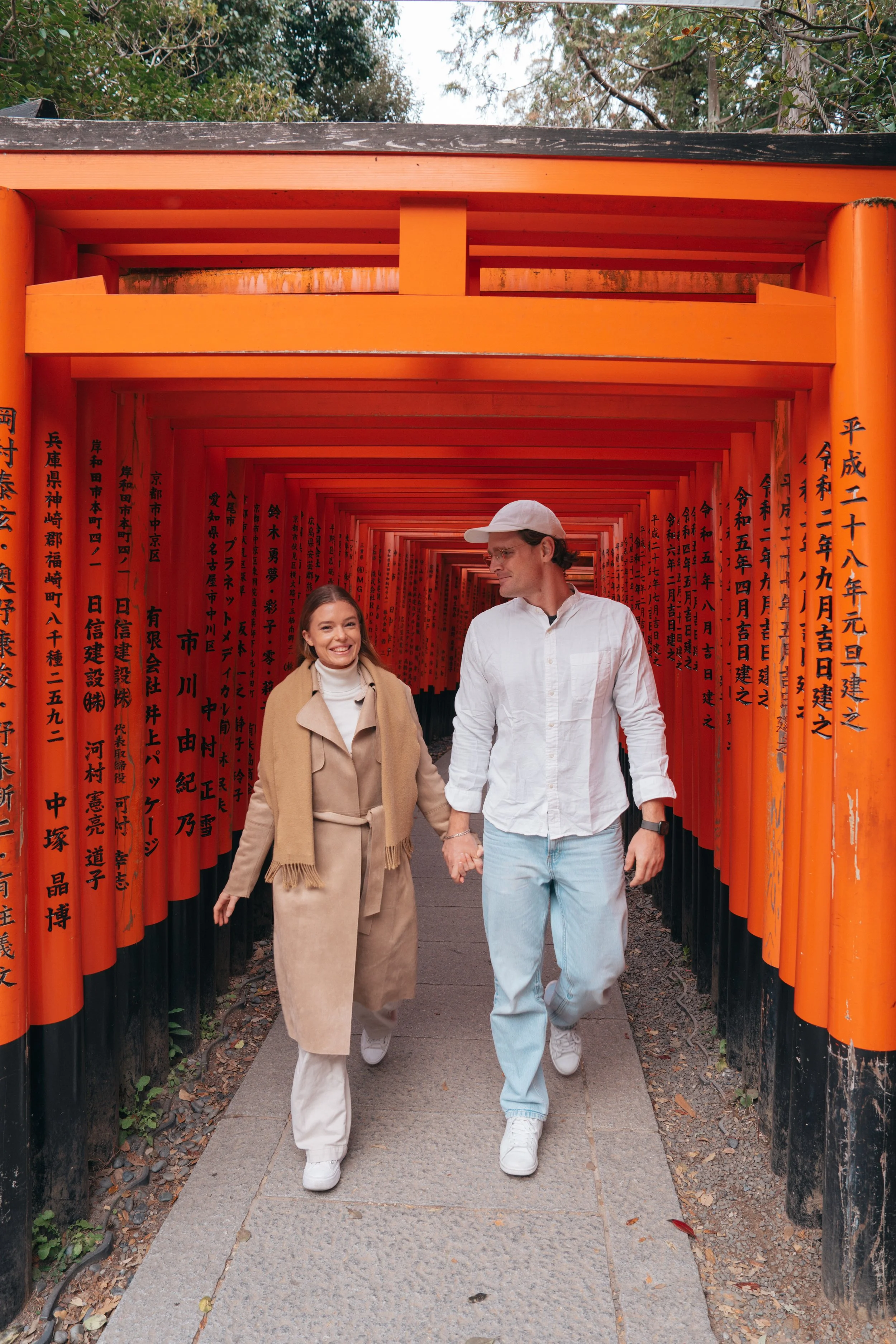
The next morning we went to Fushimi Inari early. The tunnels of red gates are magical when they're quiet, and you don't need to do the full loop to get views over Kyoto. Our unplanned favourite came after: tea and floral mochi at Rokujuan, a traditional house and garden. Book the tea room.
To be honest, two nights in Kyoto wasn't enough. We never made it to Arashiyama's bamboo grove, so give yourself a third night if you can.
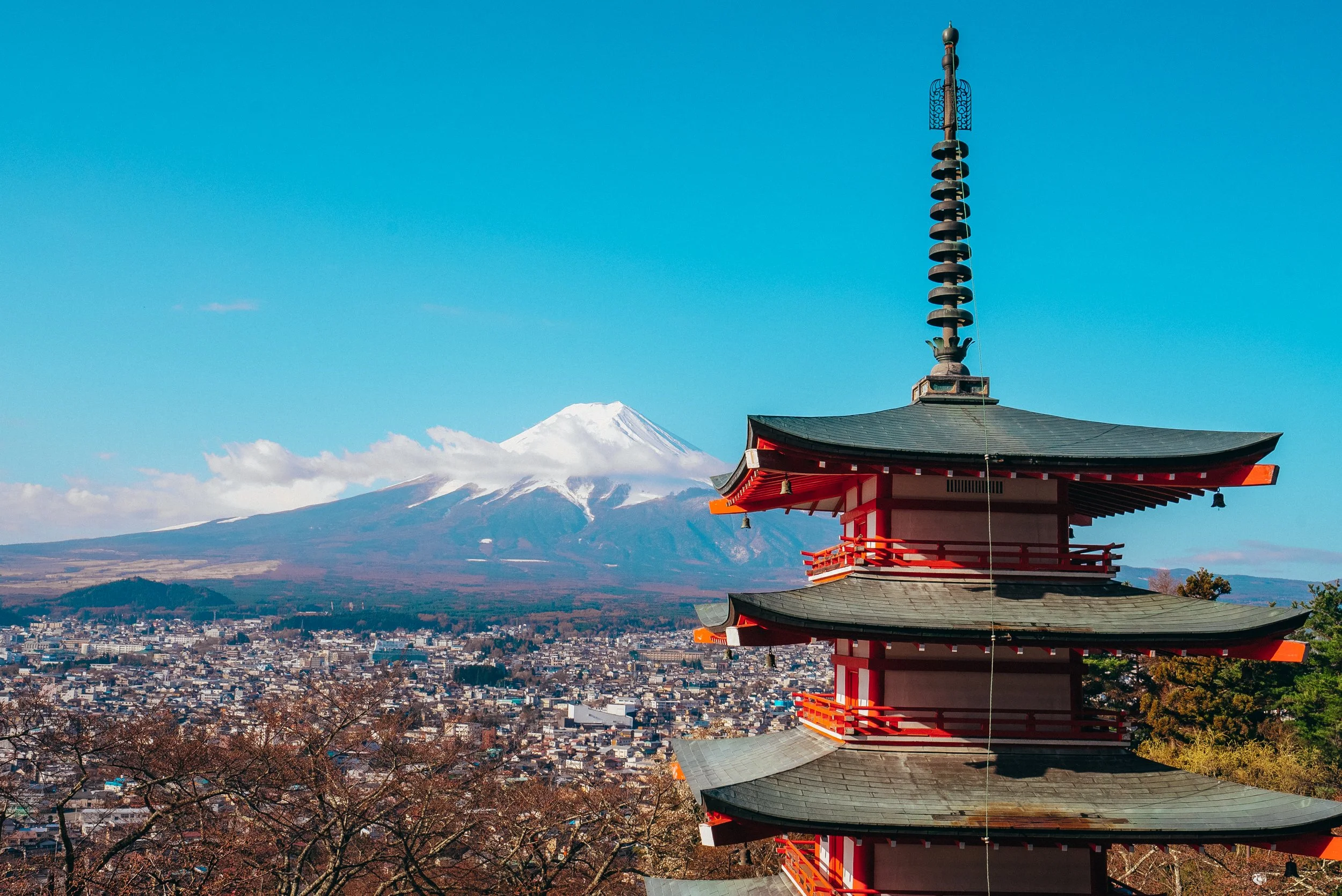
Chureito Pagoda with Mount Fuji behind, Fujiyoshida
Mount Fuji: worth the wait for the weather
From Kyoto we took the bullet train to Shin-Fuji and a two-hour bus around the mountain to Fujiyoshida. It was a long day, but the first sight of Fuji from the train made us gasp.
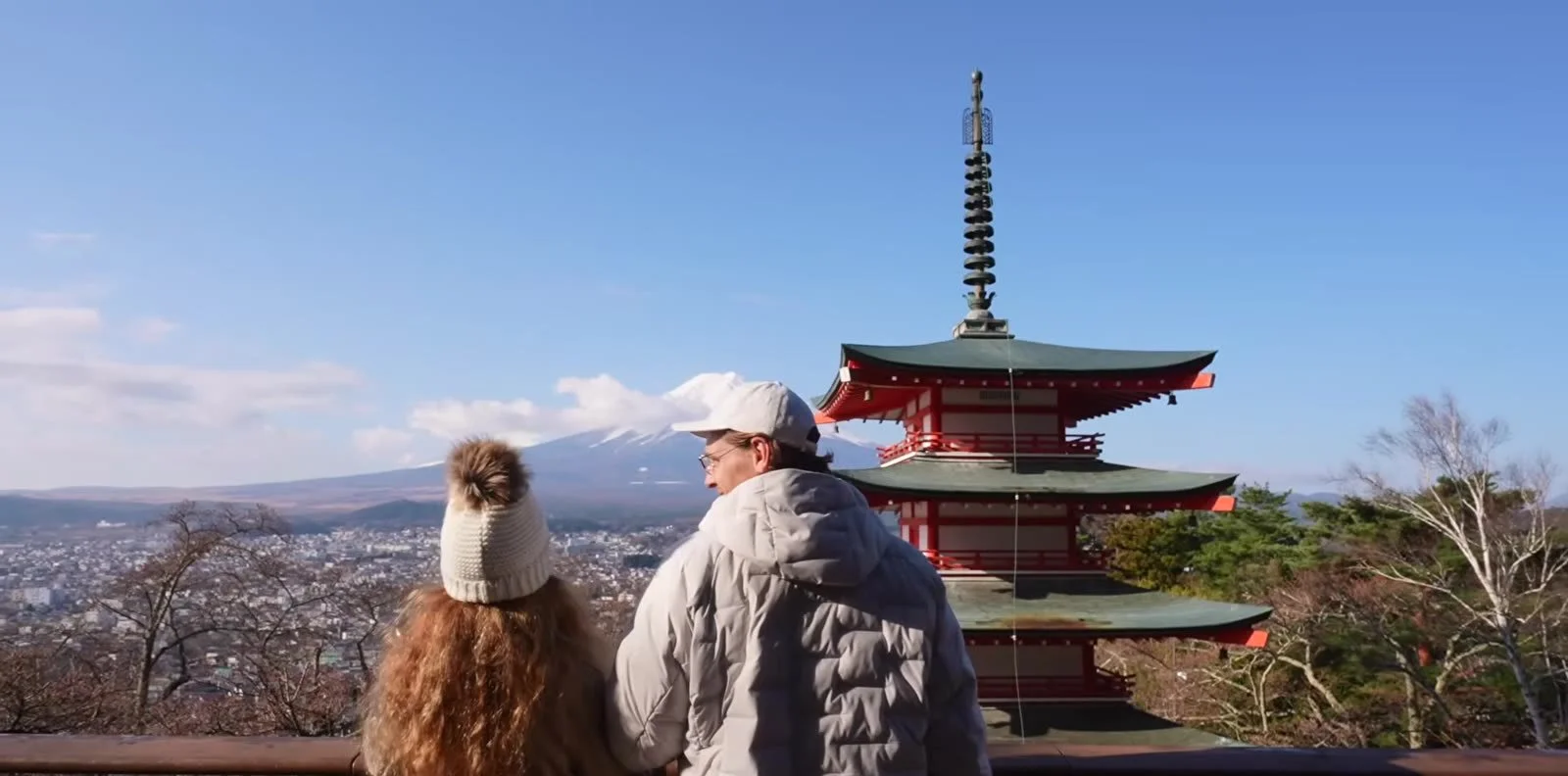
Chureito Pagoda and Mount Fuji, worth the 7am start
Our first morning, we borrowed bikes from our guesthouse and rode to Chureito Pagoda, then climbed the stairs for the classic view of the red pagoda with Fuji behind it. We got there around 7am, and it was quiet. The cherry blossoms weren't out yet; they usually peak here around mid-April.
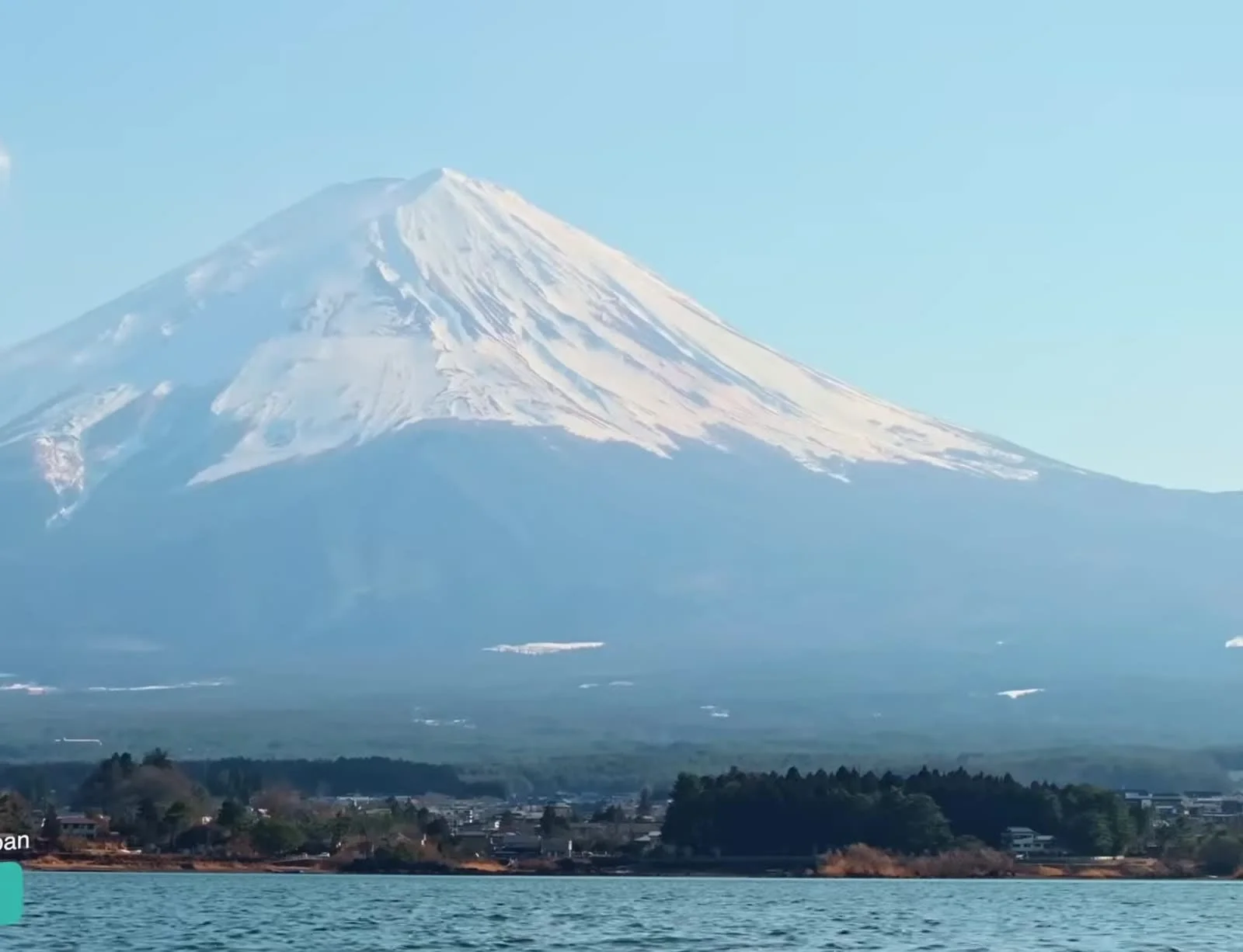
Mount Fuji from Lake Kawaguchiko
Then we had coffee by the famous Honcho Street view of Fuji and caught the bus to Lake Kawaguchiko. On the way back the bus passed the viral Lawson convenience store, so we hopped off for the photo like everyone else (we’ve heard this spot has since been boarded up so no public can take photos anymore). Dinner was at a cosy little izakaya, followed by a bike ride home in the dark.
We stayed at Asumi Onsen, a simple, family-run onsen guesthouse looked after by a sweet older couple. It was more basic than we expected, but being among the locals is something we'll never forget.
The one thing to know: Fuji hides behind cloud a lot. Give yourself two or three nights here so you have more than one chance at a clear view. If you'd rather not handle the trains and buses, this Fuji day tour covers the main viewpoints in one go.
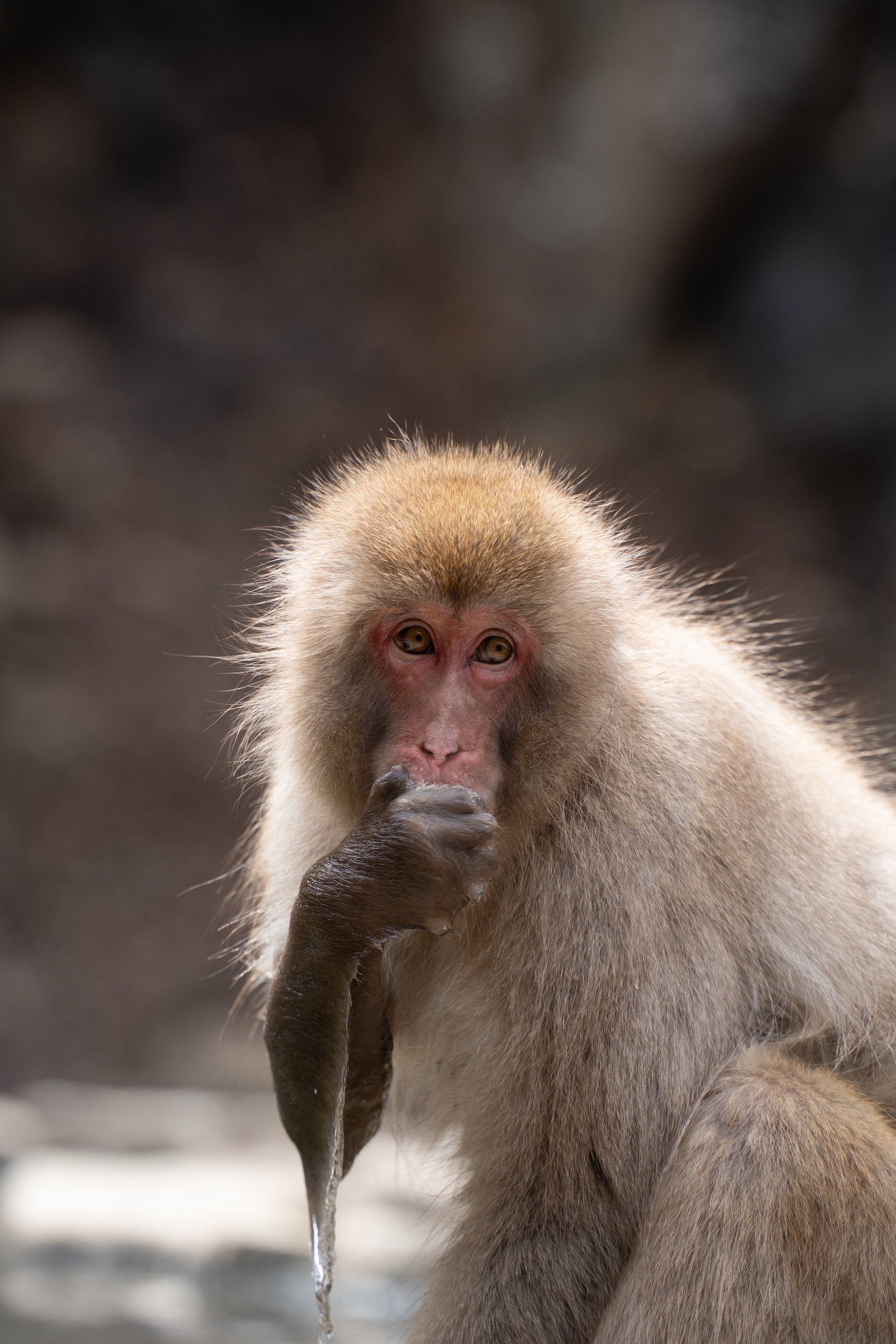
A naughty snow monkey snacking at Jigokudani, Nagano
Nagano: ryokans and snow monkeys
There's no direct bus from Fuji to Nagano. We took five local trains: about five hours and roughly $34 each, paid with Suica. The faster option is a local train back to Tokyo and then a 1.5-hour bullet train north (about $80). Both work, but the slow way was cheaper and beautiful.
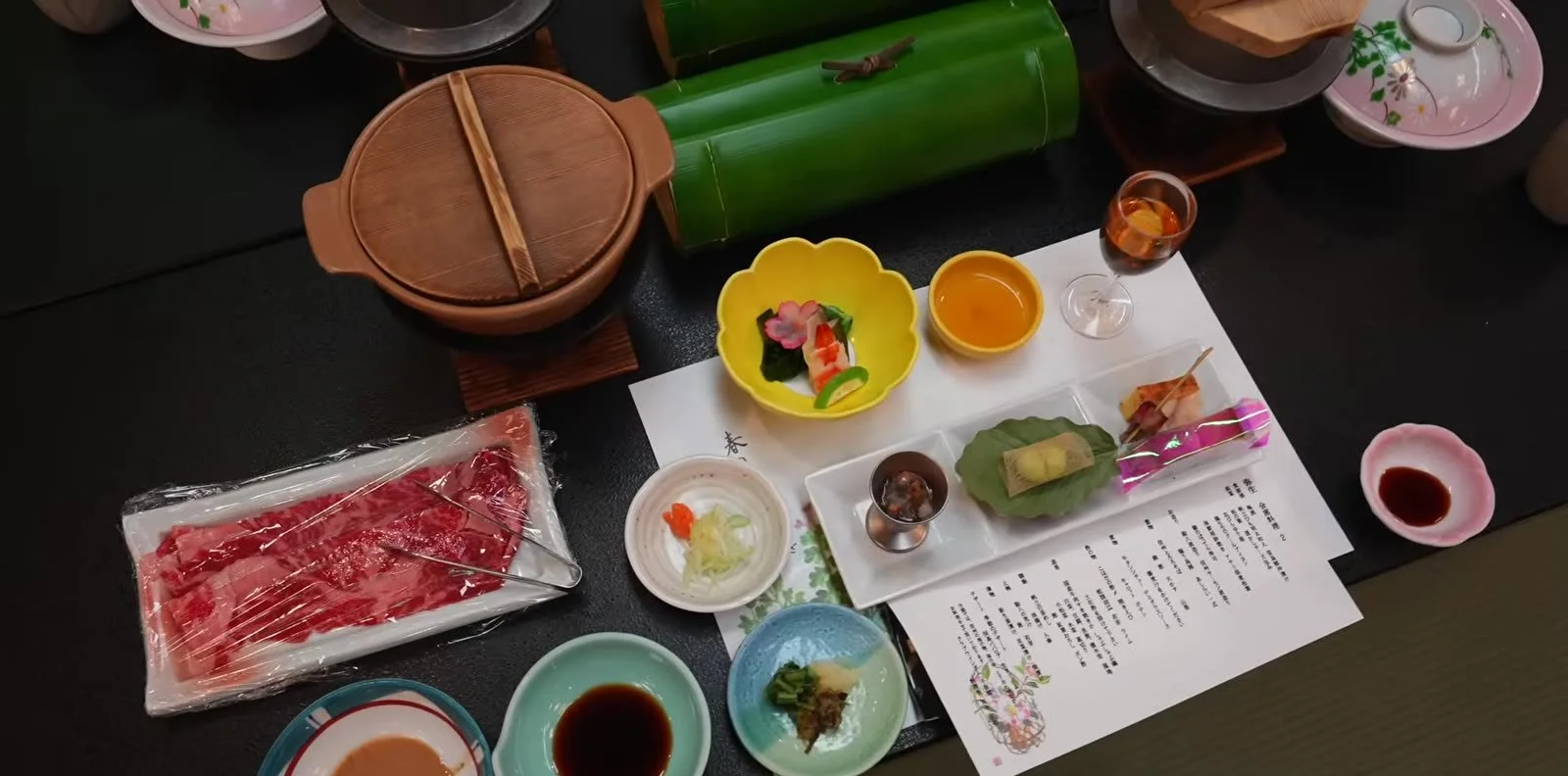
Dinner at our ryokan in Togura-Kamiyamada, Nagano
We stayed at a traditional ryokan, Club Wyndham Chikumakan, in the hot-spring town of Togura-Kamiyamada, and if you do one splurge in Japan, make it this (ours was under $100 a night). You swap your clothes for a yukata, sleep on futons on tatami mats, and dinner is a feast cooked at your table. Then there's the onsen. A quick note if you've never been: you wash thoroughly on a little stool first, and you go in without a swimsuit. It feels strange for about thirty seconds, then it's the most relaxing thing in the world.
Our last day was the Jigokudani Snow Monkey Park. From Nagano Station it's the snow monkey bus, then an uphill walk through the forest. It was spring, so the monkeys weren't bathing (too warm for them), but watching them groom and play right next to us was still one of those moments where you just stand there grinning. Come in winter for the famous hot-spring baths, and wear proper shoes, because the path gets icy.
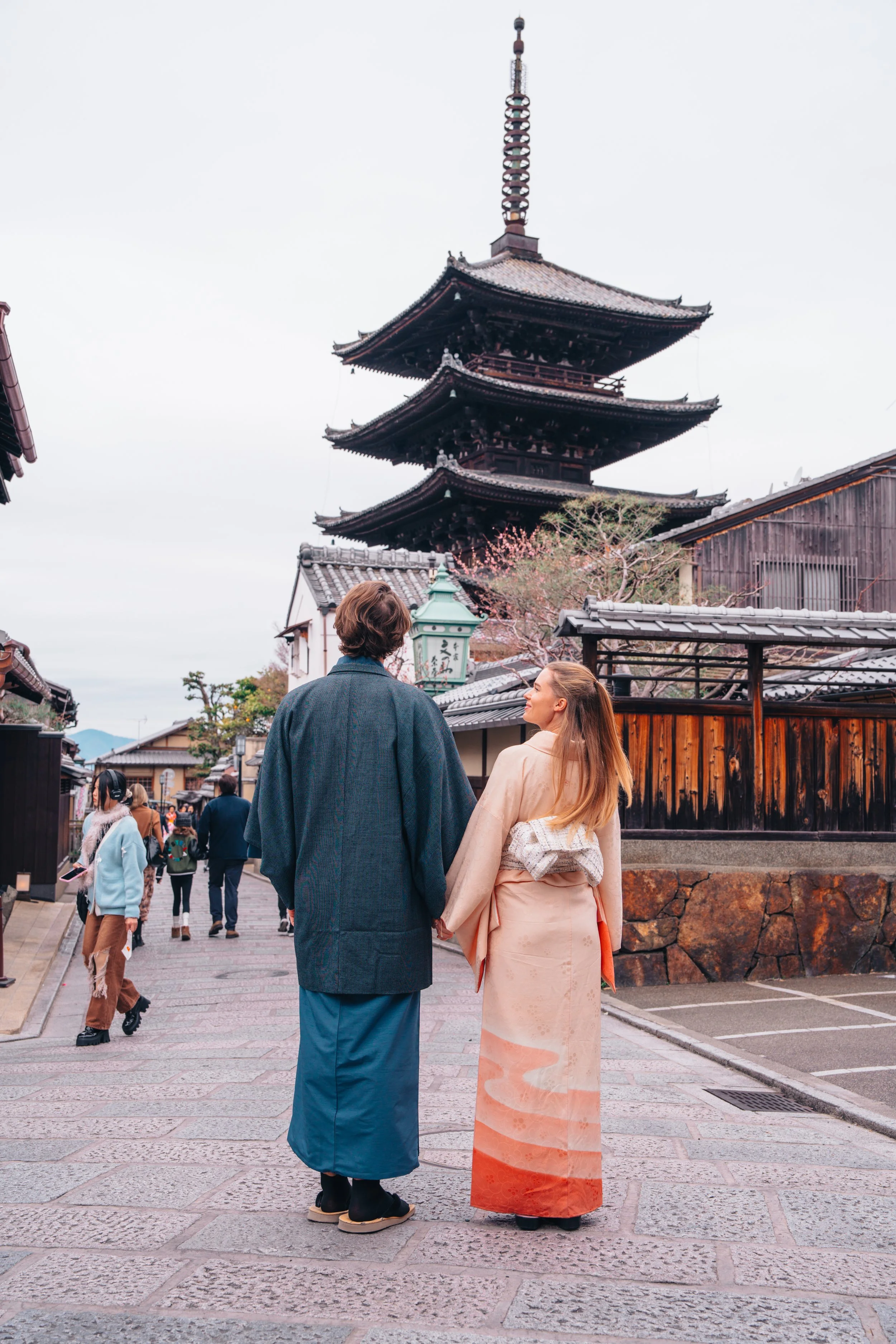
Us in kimonos below the Yasaka Pagoda, Kyoto
Best time to visit Japan
Spring (March to May): cherry blossoms and lovely weather, but it's the busiest and priciest time. We went in spring and it was magical, but book early.
Autumn (October to November): autumn colours, crisp air and fewer crowds. Probably our pick for a second trip.
Summer: hot and humid, but full of festivals.
Winter: the best time for snow monkeys, skiing and onsens.
Getting around Japan
Japan's trains are as good as everyone says. A few things that made it easy for us:
Add a Suica or Pasmo card to your phone. You tap in at stations, convenience stores and vending machines.
Do the maths before buying a JR Pass. The price went up a lot in 2023, so for many routes individual bullet-train tickets now work out cheaper. It depends on how far you're going.
Use Uber or the GO taxi app late at night, when the trains stop.
Send your big bags ahead. Luggage forwarding (takkyubin) from hotel to hotel is cheap and saves you hauling suitcases onto trains.
Honest tips we wish we'd known
Carry cash. Japan is more card-friendly than it used to be, but many small restaurants and market stalls still only take cash.
Get an eSIM before you land. We used Holafly and it worked the whole trip (use code RHETTANDCLAIRE for a discount). You'll use maps constantly.
Wear comfortable shoes. We regularly walked 20,000 steps a day.
Pack layers. The mountains are much colder than the cities.
Don't over-plan Tokyo. Some of our best moments were just wandering side streets and convenience stores.
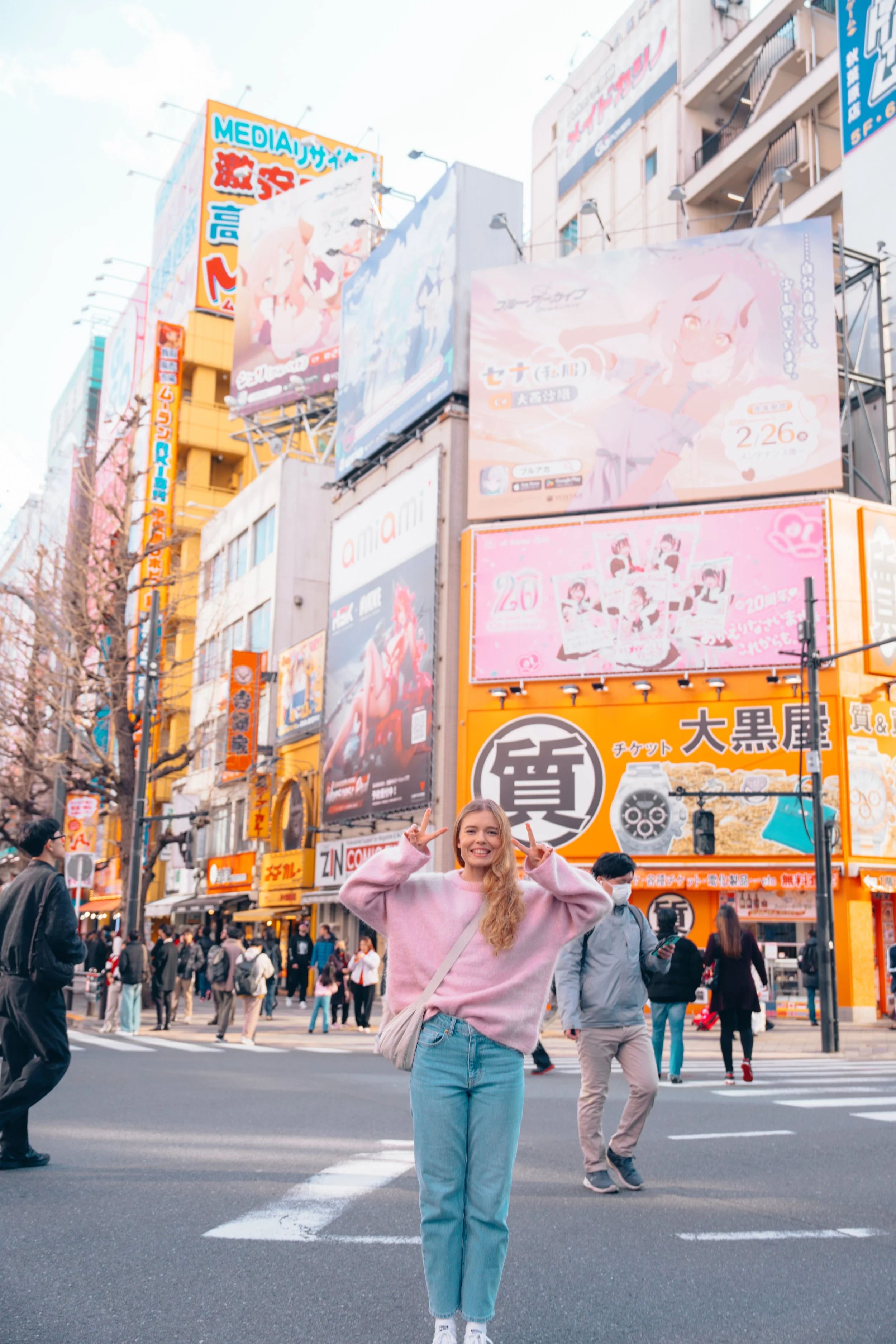
Claire soaking up the colourful city streets
So, is Japan worth it?
For us, completely. It's safe, spotless and easy to get around, the food is incredible at every price point, and it manages to feel both futuristic and very old at once. One morning you're sitting in a 1,000-year-old temple, and that evening you're playing claw machines in a neon arcade.
If you'd like help planning, start with our free Essential Japan Guide: three pages on visas, the 2026 tax changes, seasons, trains and money. When you're ready for the full route, our Japan Destination Guide → has the day-by-day plan, 30+ stays and our Google Map of 180+ favourite spots. You can also browse all the Japan tours we've saved.
And if you want to see it all, from the deer and the ramen booths to the snow monkeys, watch our full Japan video here.